
Pond & Lake Maintenance Plans
Clear Lake Program
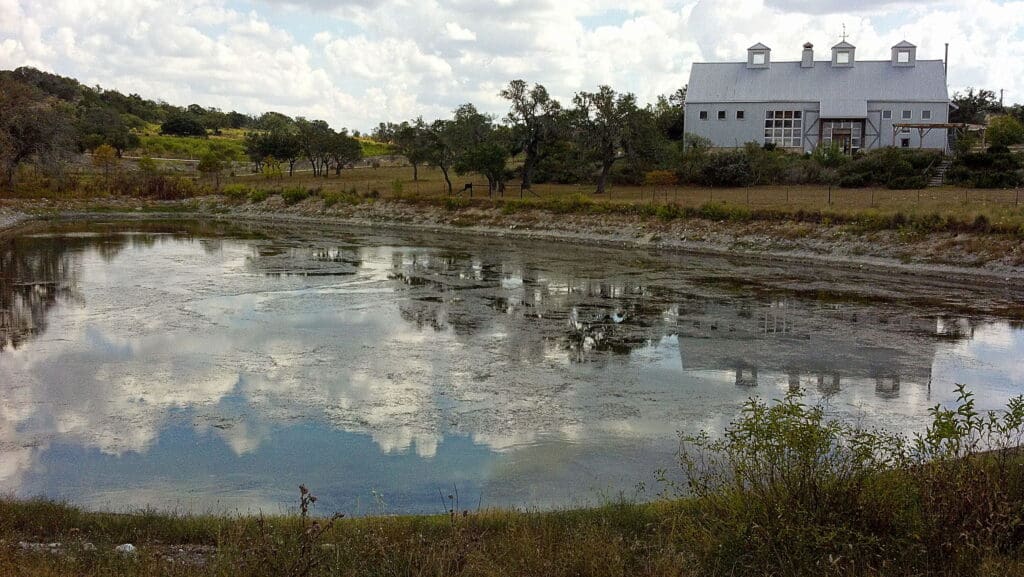
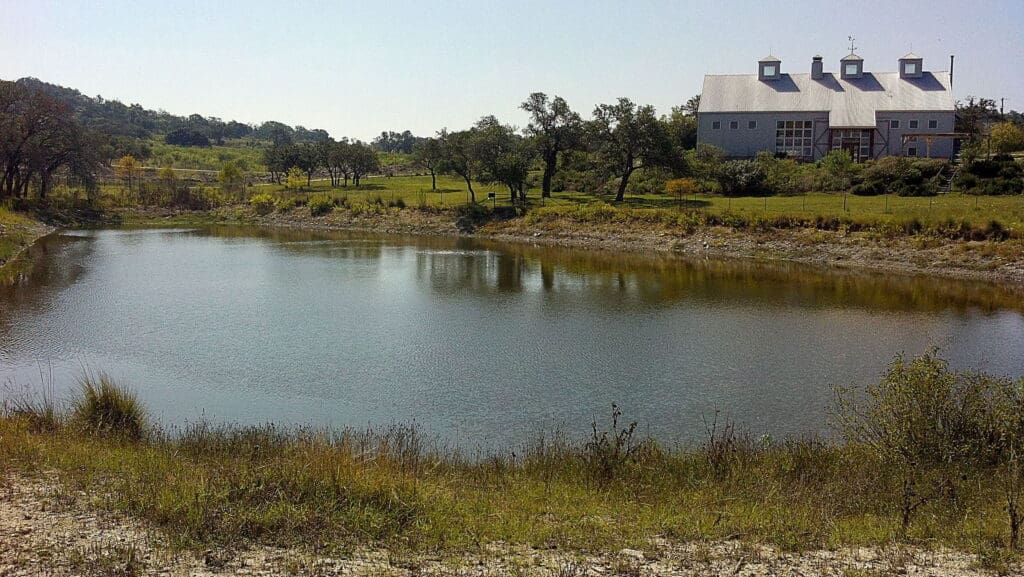
Our Clear Lake Program provides regularly scheduled lake inspections, which focus on proactive techniques to keep aquatic weeds and algae under control so they do not become an unsightly problem. The Clear Lake Program visits also focus on pond and lake equipment maintenance and servicing. The Clear Lake Program is very popular with commercial properties as well as private land owners.
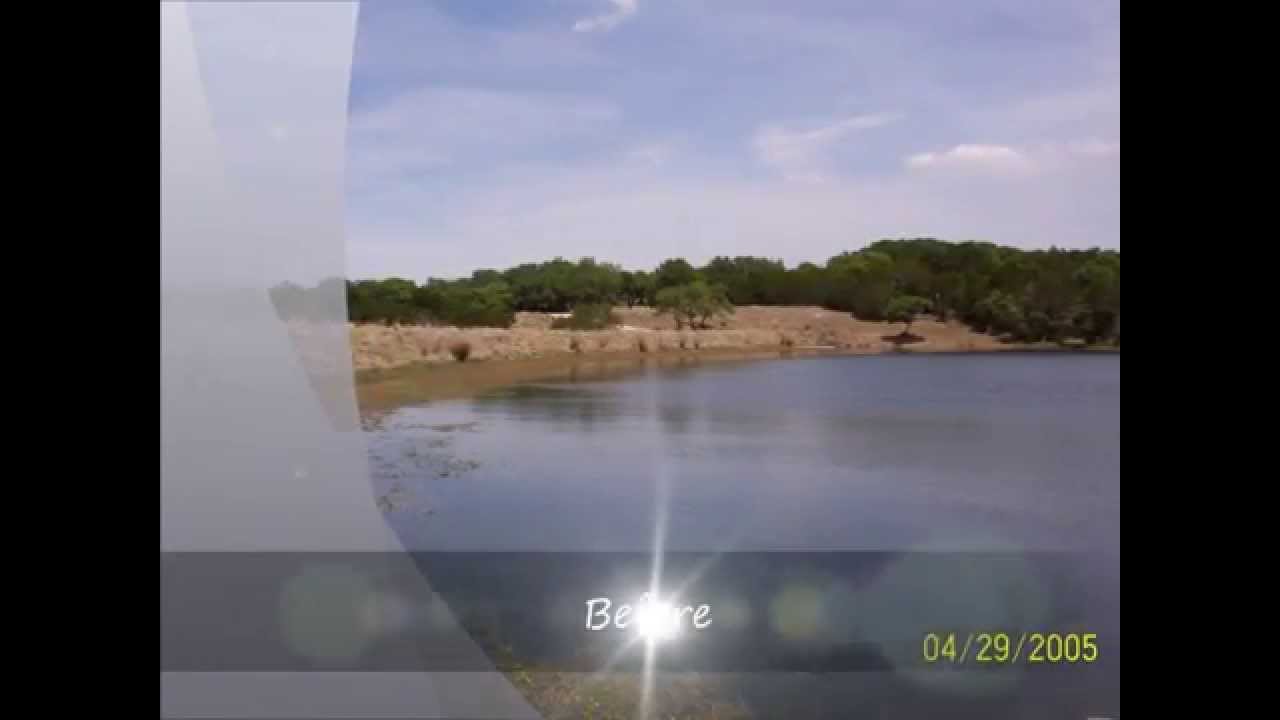
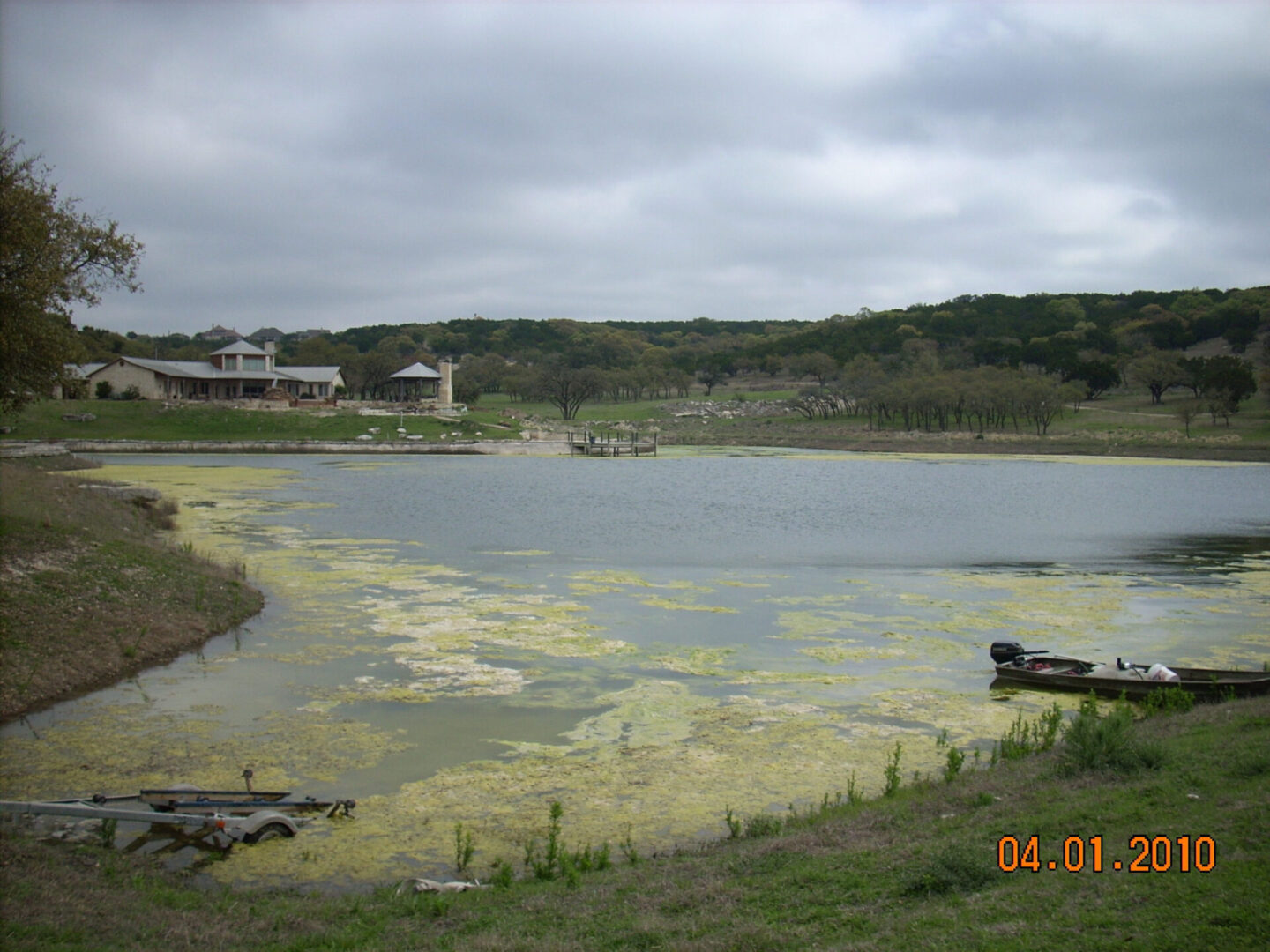
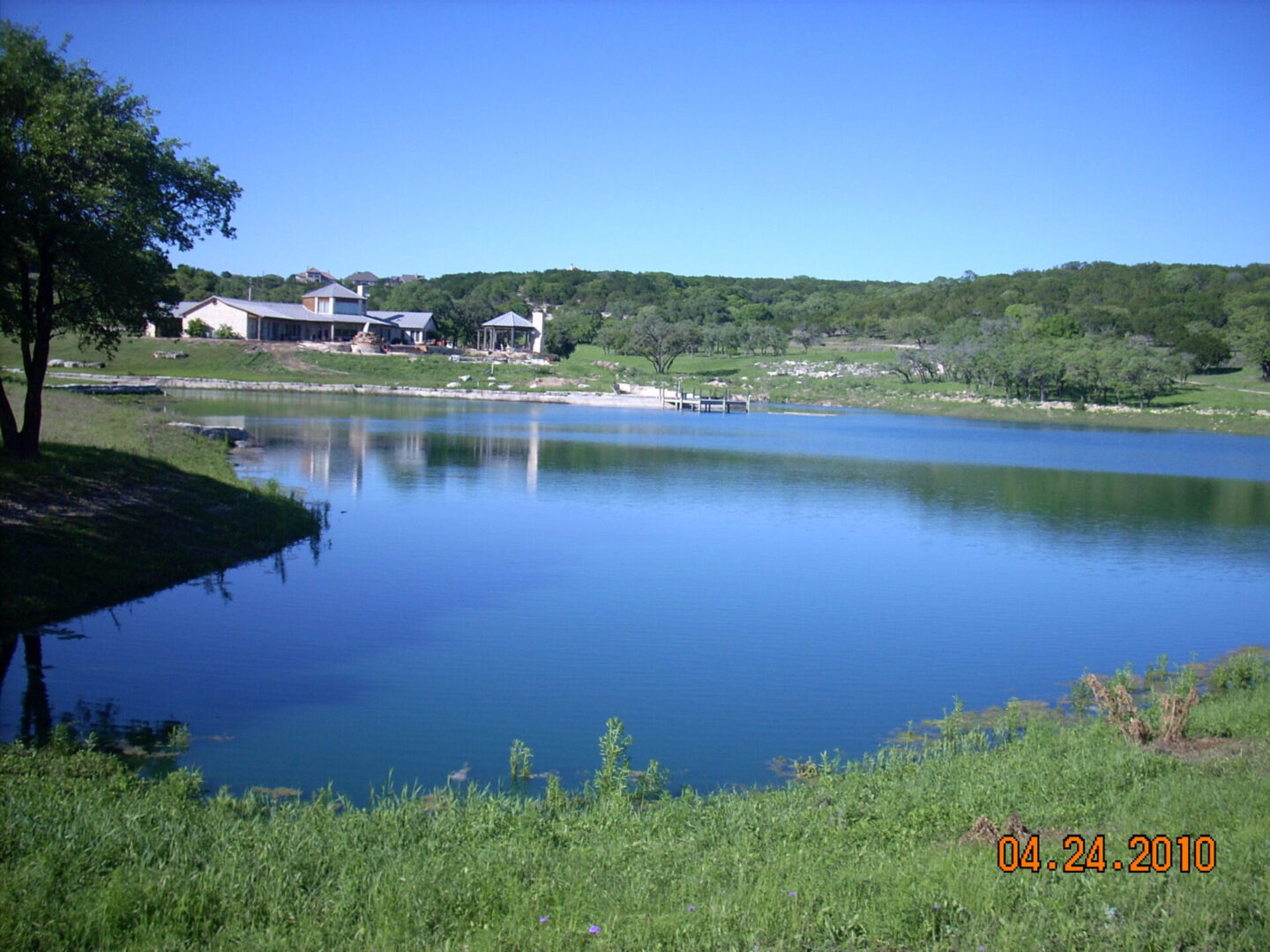
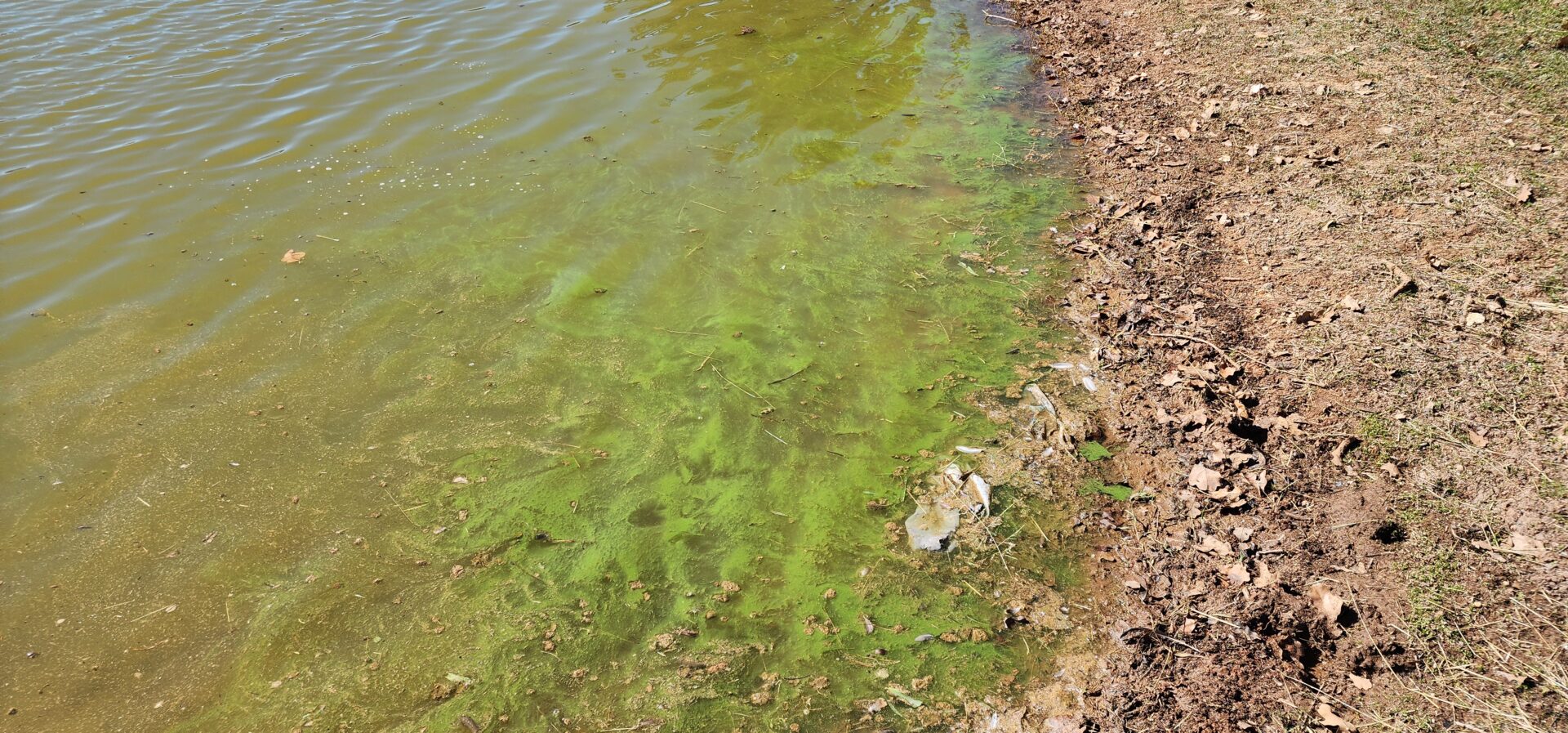
Potentially Toxic (PTOX) Cyanobacteria Screening (Harmful Algae)

Pond & Lake Fountain Repair / Maintenance
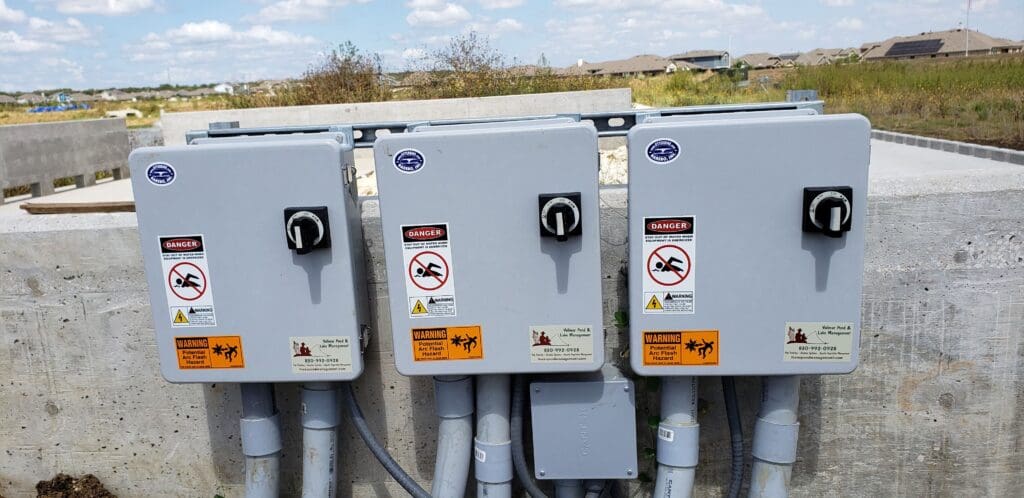
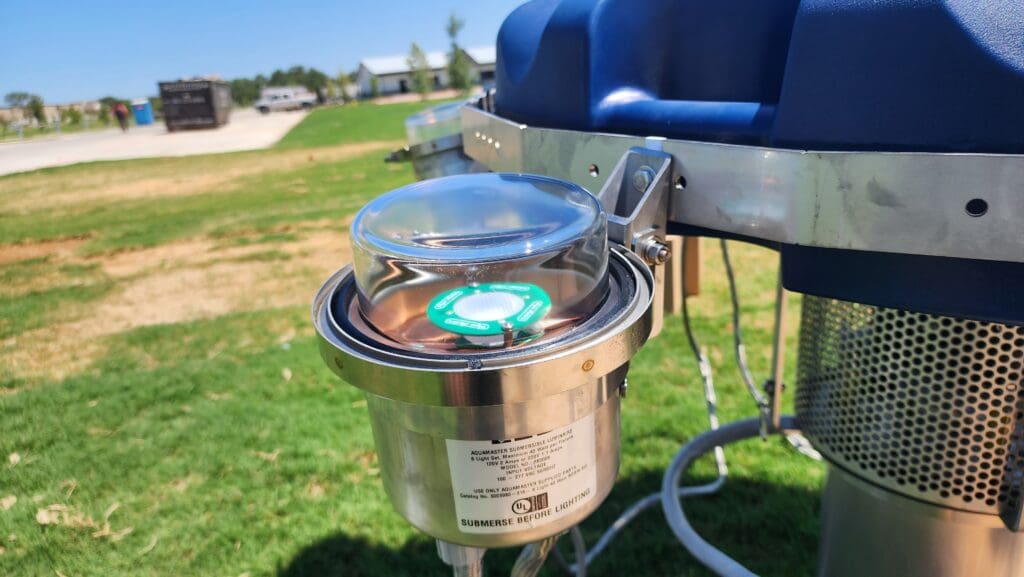
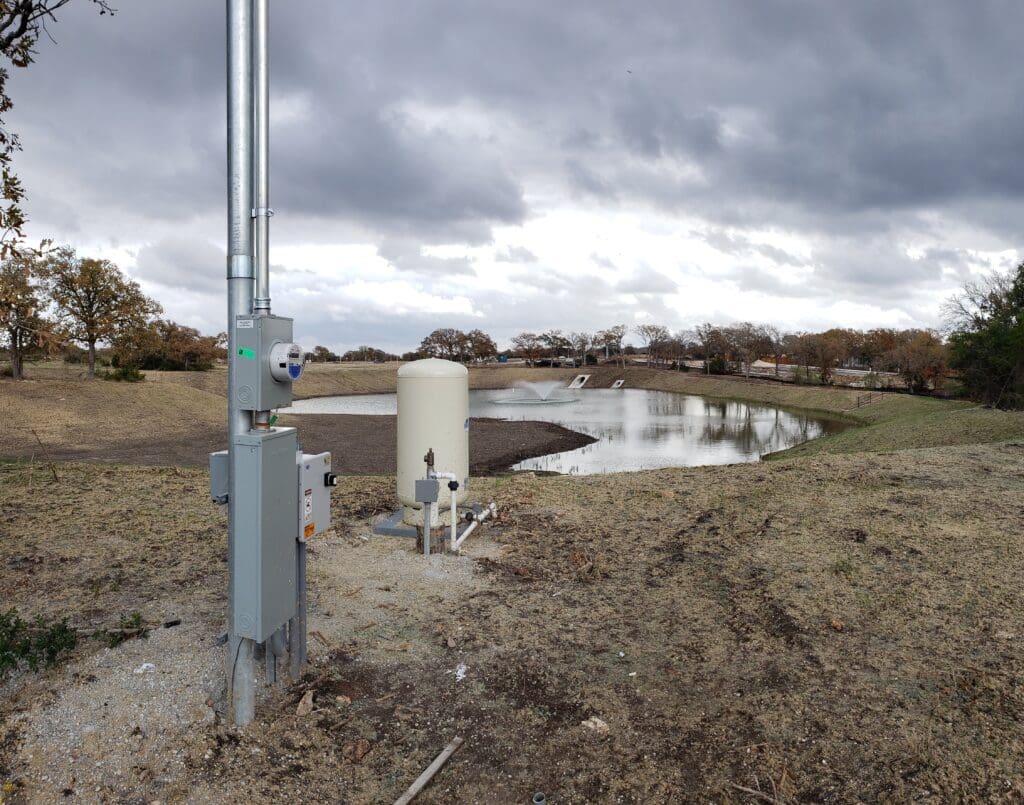
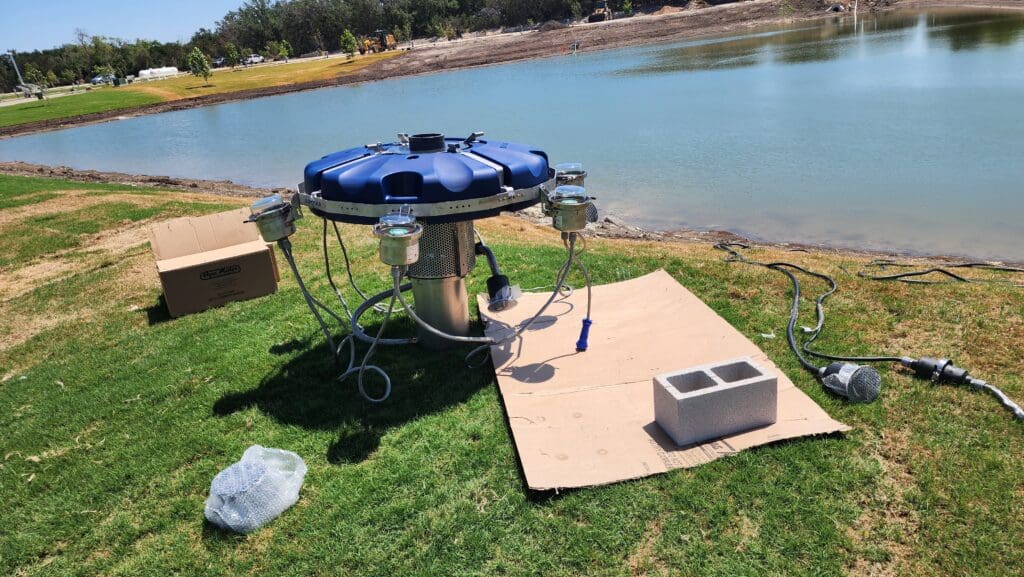
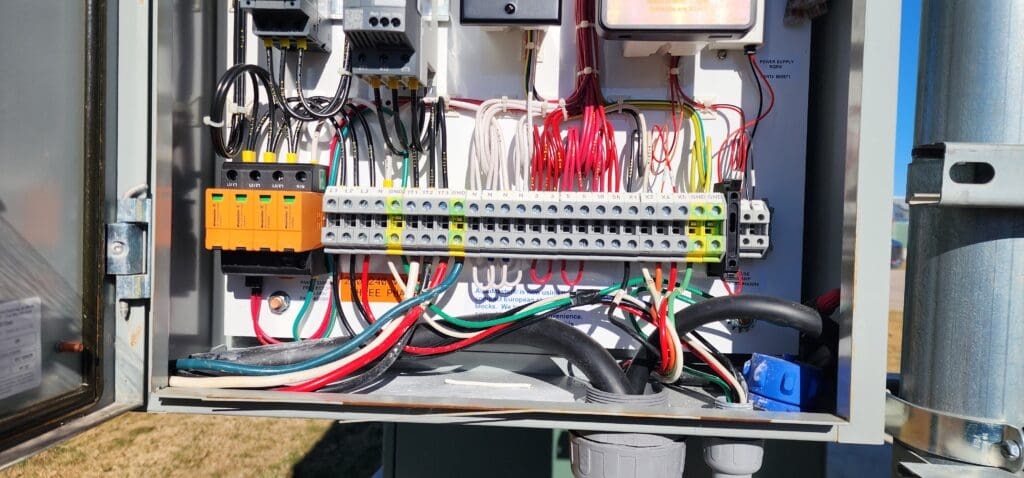
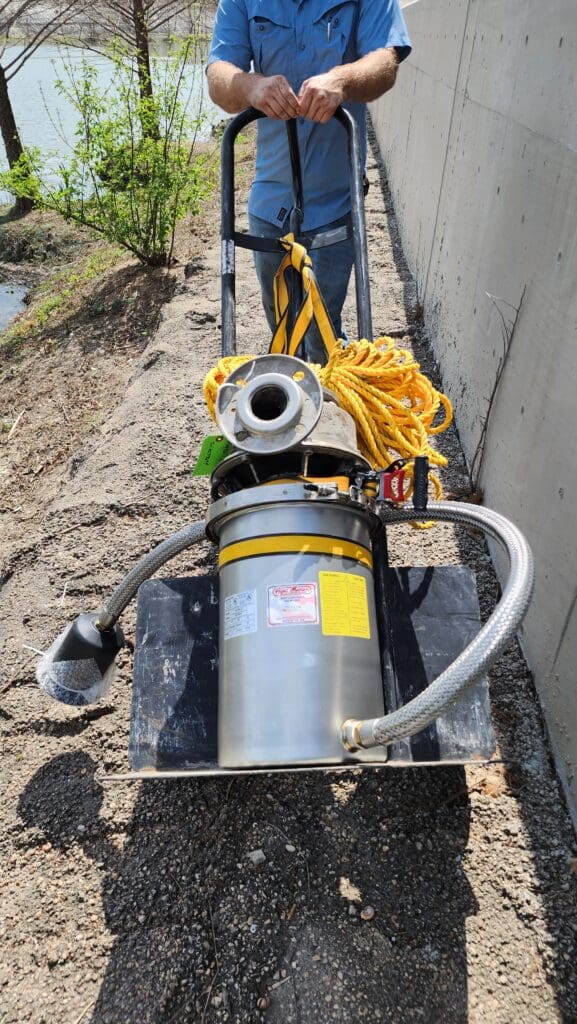
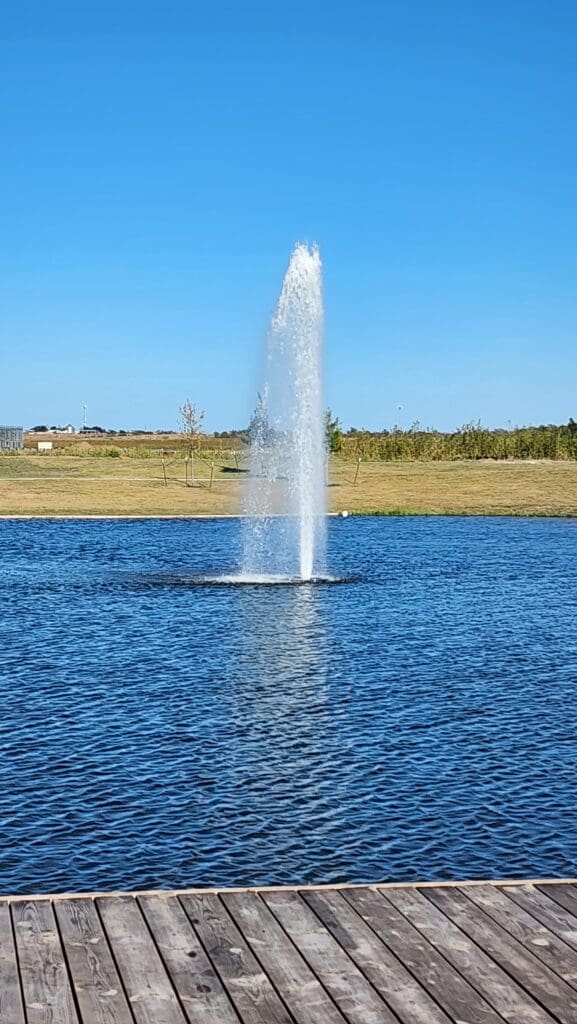
Pond and lake Fountain repair and maintence
Aquatic Vegetation Management
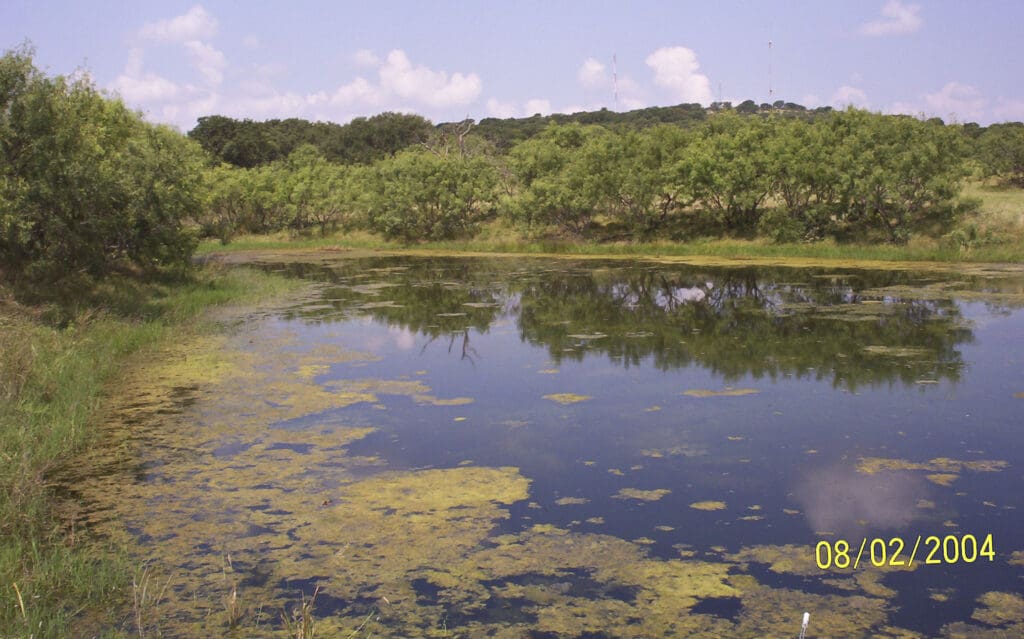
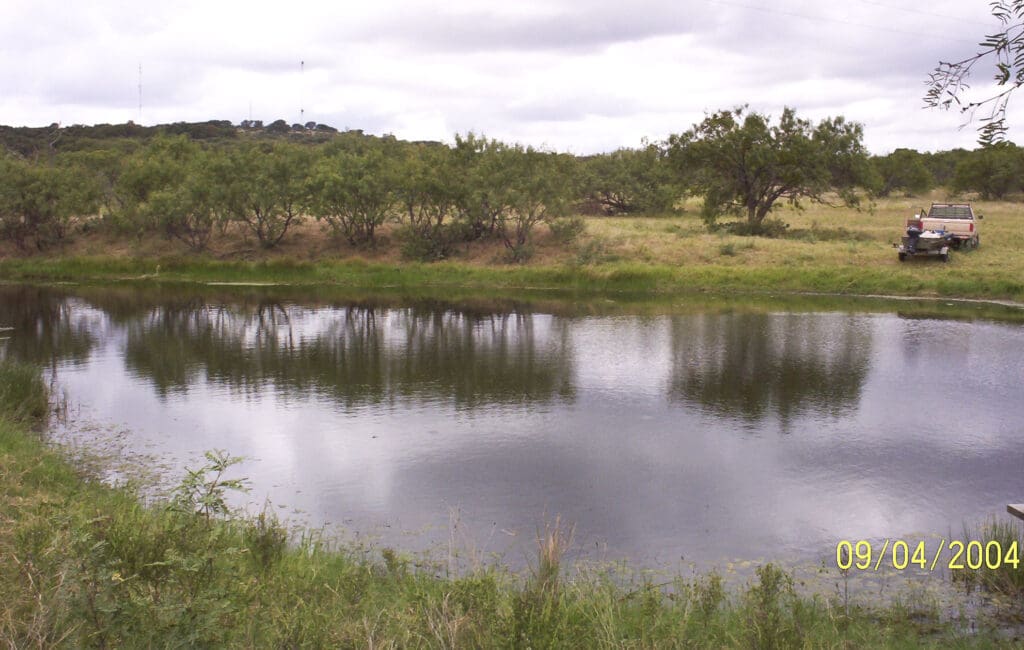
One of the most common complaints from new clients is the amount of aquatic weeds and algae in their ponds or lakes. In most cases, the target for lake vegetation coverage is around 20% or less of the total lake acreage.
The most effective management technique for excessive aquatic vegetation and algae in your pond or lake is the properly timed application of EPA-approved algaecides or herbicides. These aquatic algaecides, or herbicides, need to be precisely applied.
We are compliant with the Clean Water Act, the National Pollutant Discharge Elimination System, and the Texas Commission on Environmental Quality.
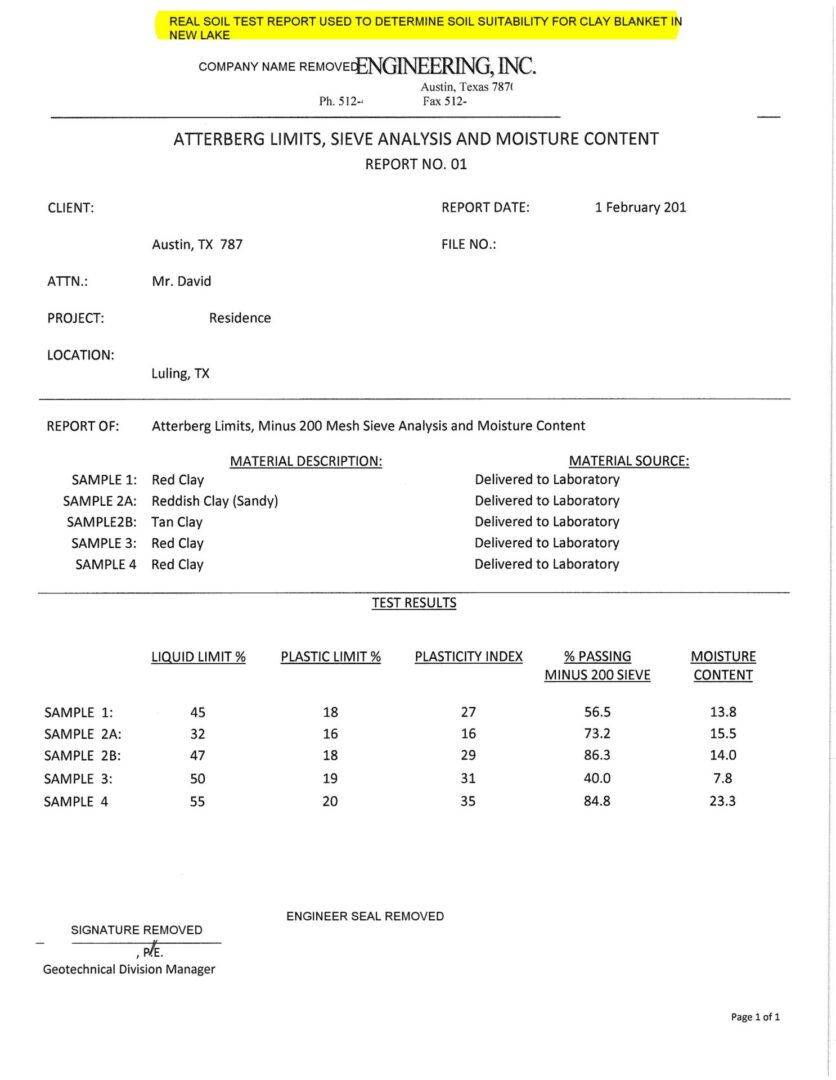
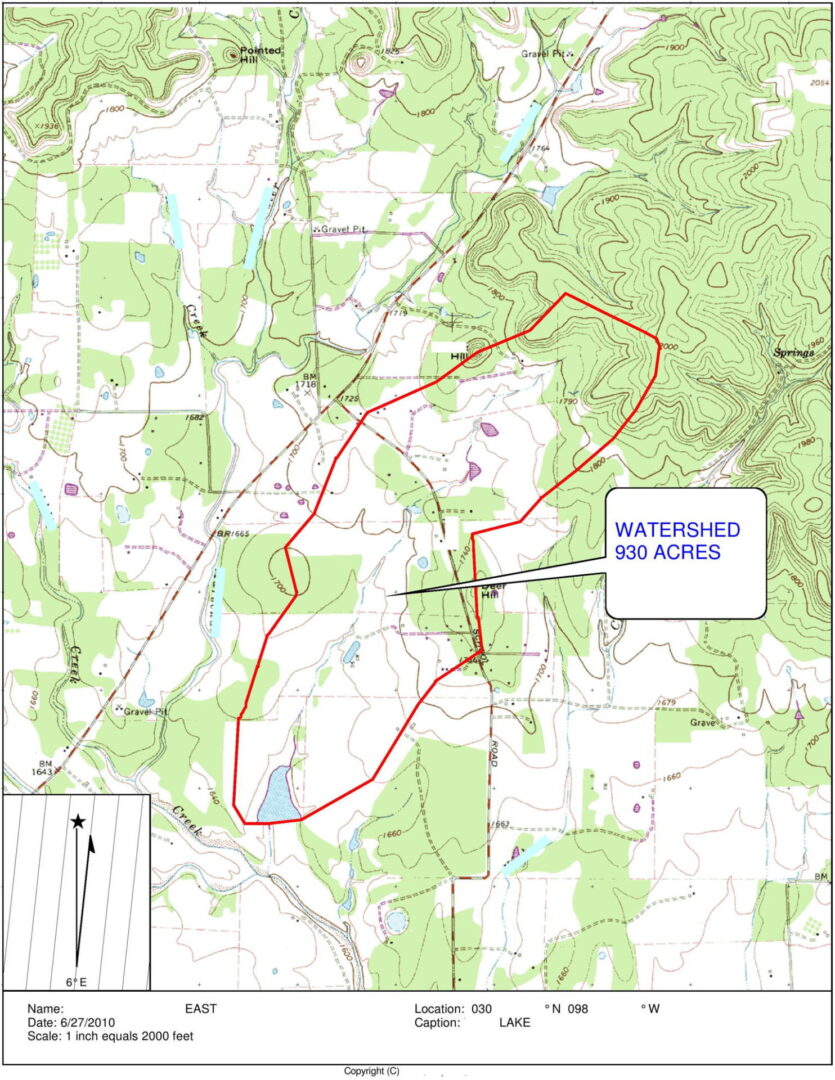
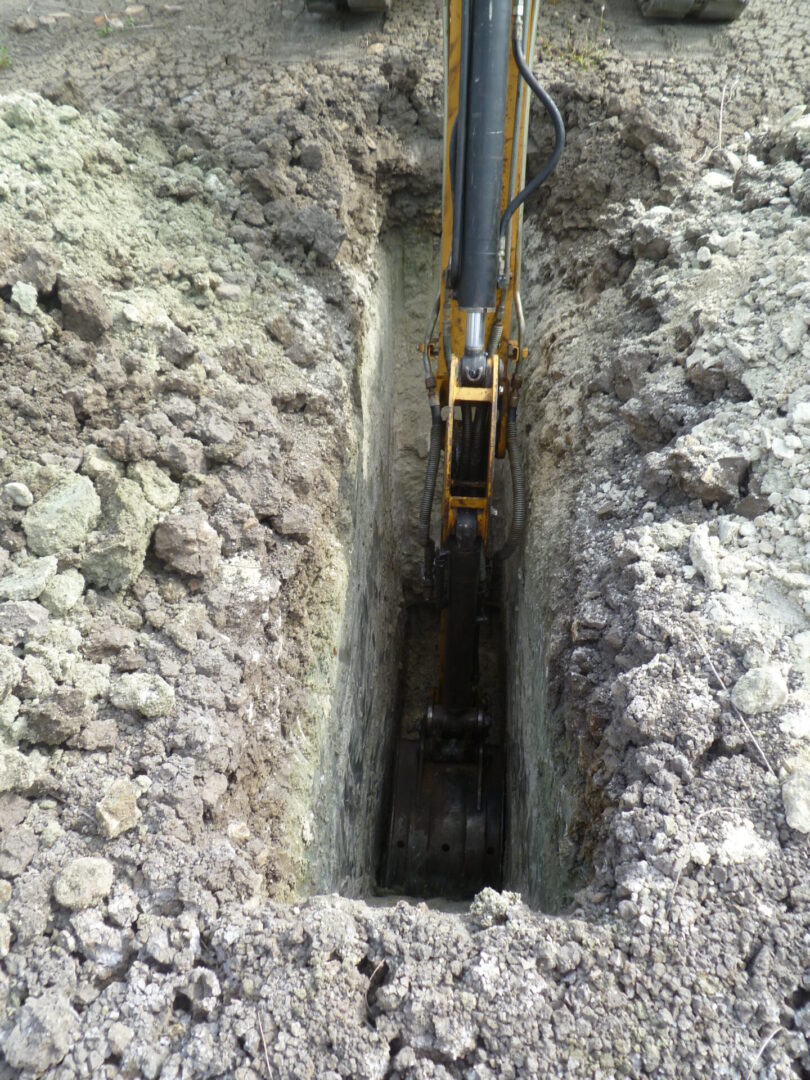
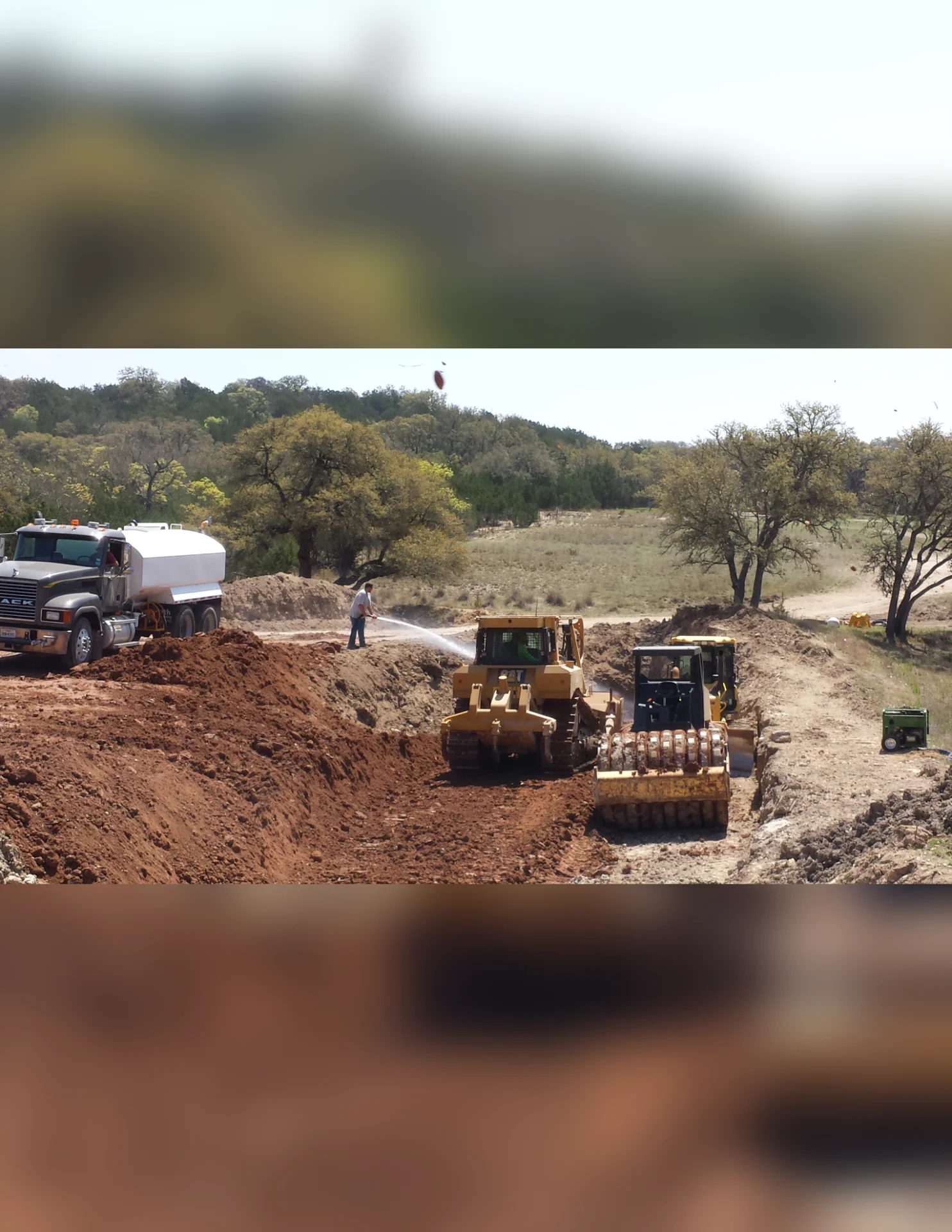
Site Evaluation, Site Design, & Lake Construction Consulting
Water Quality Testing
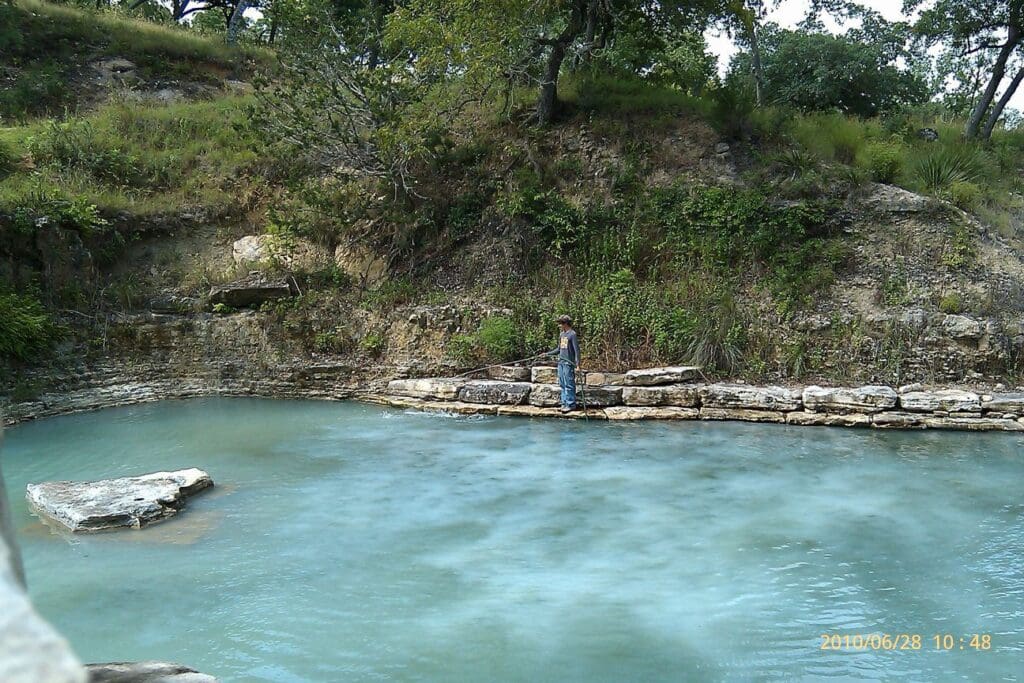
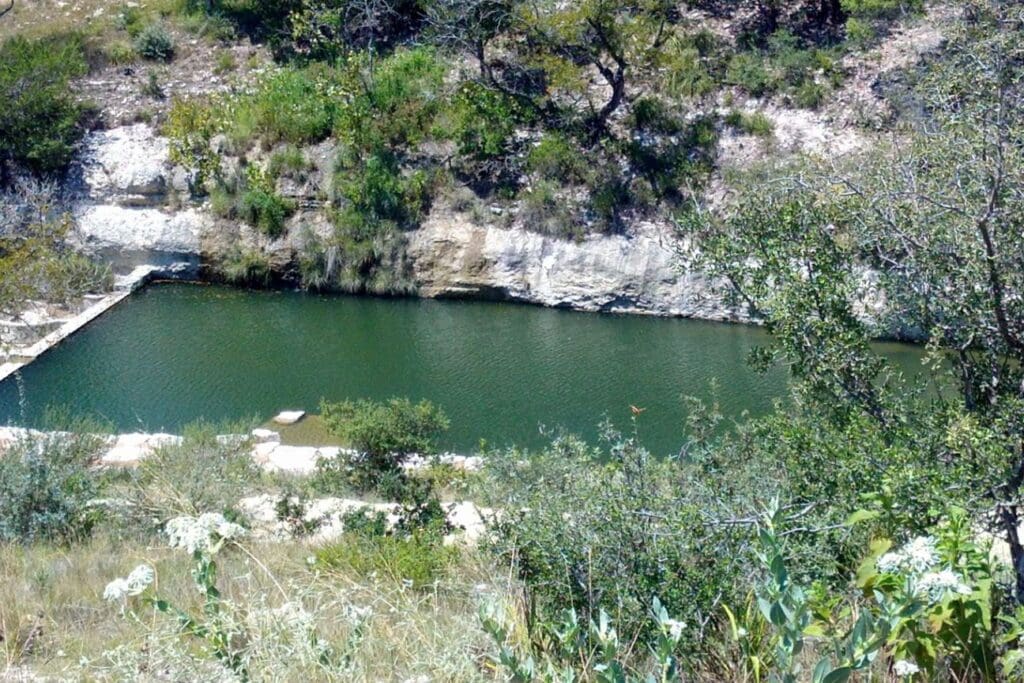
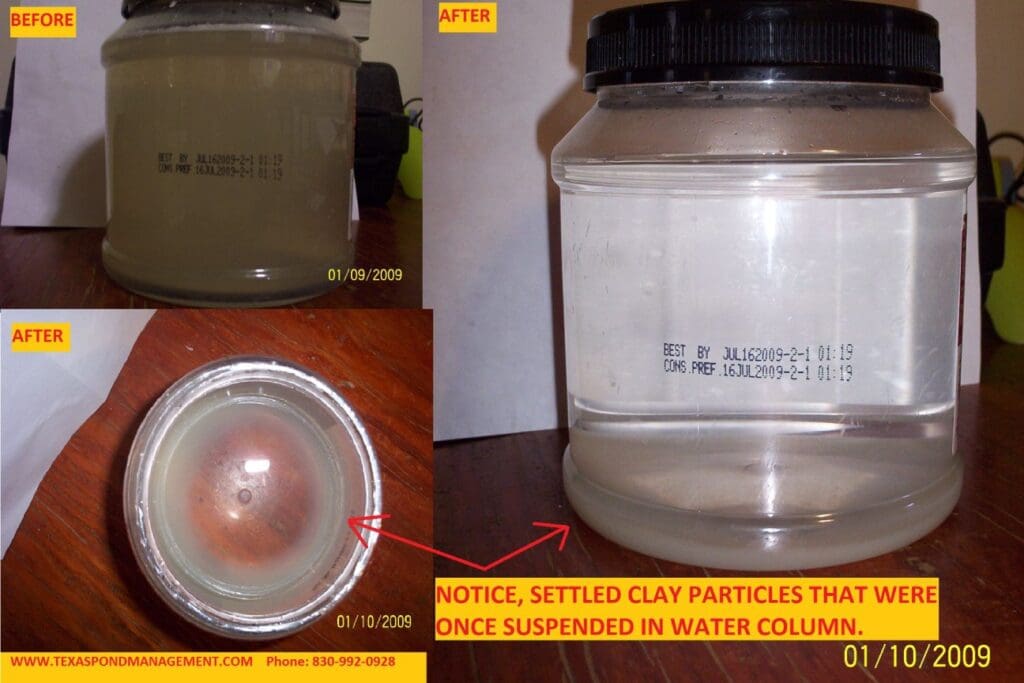
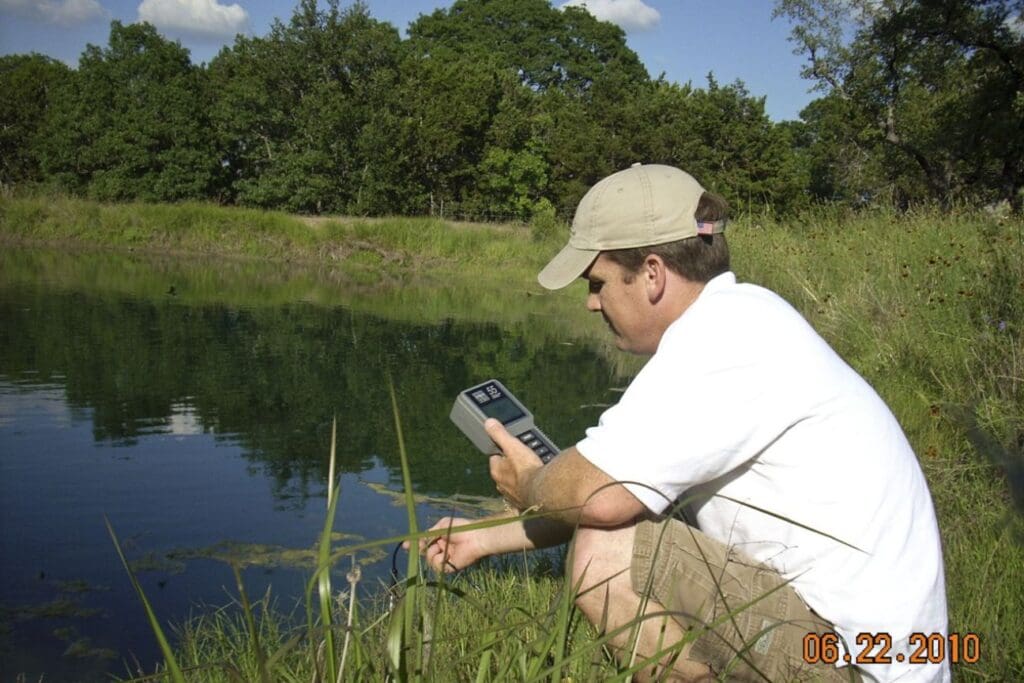
Water Quality Management
Fish Stocking Your Pond or Lake
We source our fish from many reputable fish farmers in Texas, Arkansas, Oklahoma and Missouri. Since we are not tied to one fish farm, we can increase general fish availability, fish size availability, and fish species availability.
What questions should be asked?
- What are your fishery goals for your pond or lake?
- What is the surface acreage of the pond or lake?
- What is the water clarity? Is clarity low due to algae or clay?
- What are the characteristics and uses of the upstream watershed?
- What are your goals for stocking fish in your pond or lake?
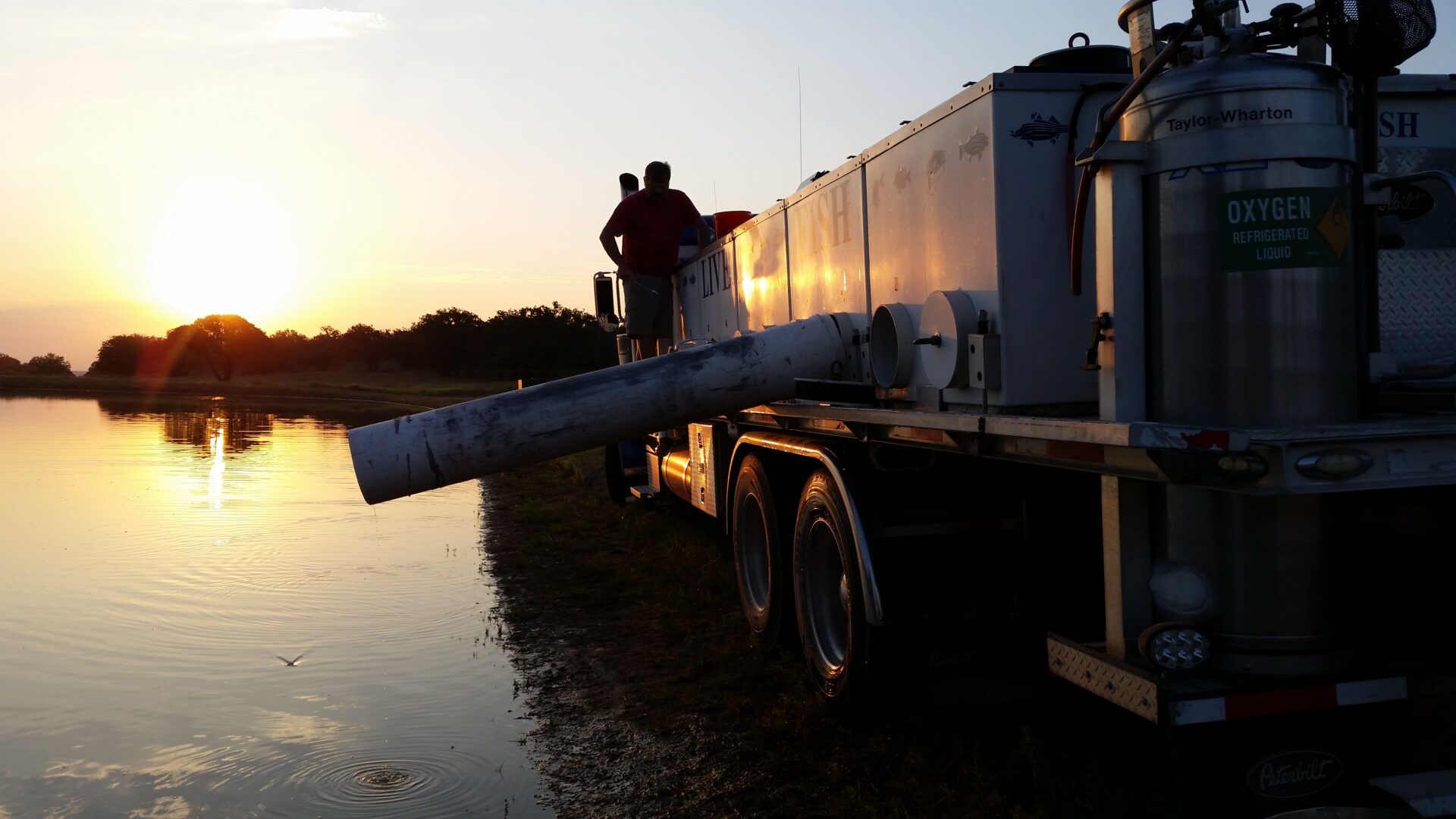
Types of Fish We Stock
Click below to jump to a fish
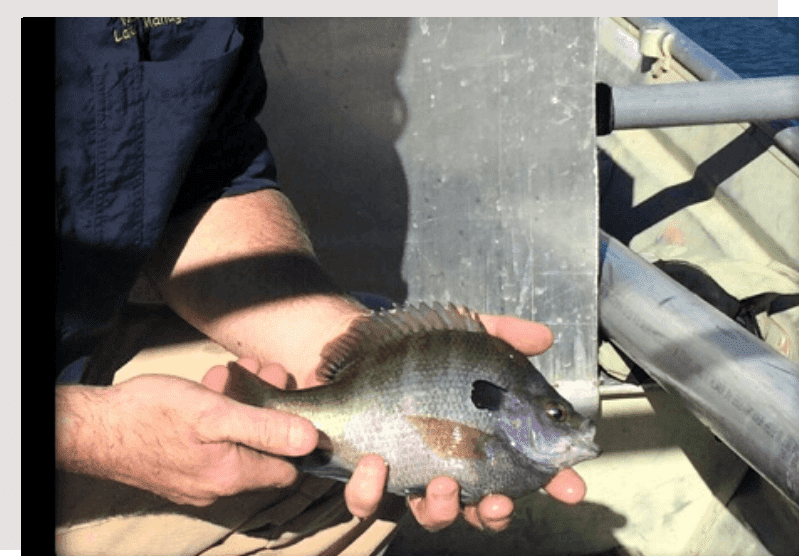
Bluegill
The classic prey fish of any trophy bass lake. Bluegill can also be your main target fish for your lake; there is nothing like hooking a pound plus Bluegill on light tackle or a fly rod. Bluegill spawn multiple times when water temperatures are between 67-80° F. They are the perfect prey fish in Largemouth Bass lakes because they spawn prolifically. In most lakes, their average size is 6-10 inches, which makes them readily available to larger bass. They also have smaller mouths and do not compete with bass as heavily as others fish like Green Sunfish and Crappie. Adults mainly feed on insects, which makes them a perfect fish for connecting lower food web nutrients with your prized bass. The Texas State Record Bluegill is just over 2 Lbs.
Redear (Shell Cracker)
Shell Crackers are another prey fish stocked in bass lakes. They get the name Shell Cracker because they feed mainly on aquatic snails and other mollusks, which carry the Yellow Grub Trematode, which is a parasite that can be detrimental to your fish. Their preference for snails also helps connect lower food web nutrients with top end bass, similar to the connection that Bluegill provide to bass by their preference for insects. During their life, Redear hardly compete with bass. Redear grow larger than Bluegill with an average size of 8-11 inches. Their larger size fills an area that Bluegill cannot provide. The Texas state record is just under 3 Lbs. Redear make great table fare. They spawn 1-2 times a year between late spring and early summer. They rarely live more than 6 years.
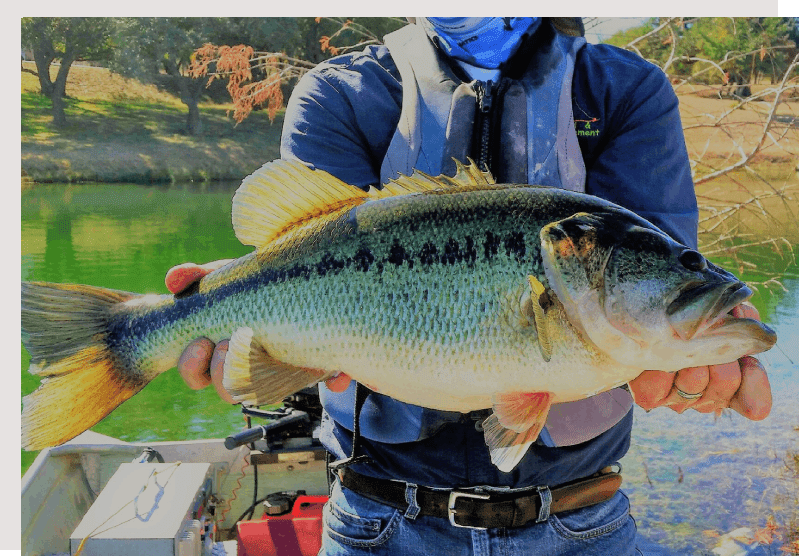
Largemouth Bass
The most popular predator fish in the South, they can reach trophy size in small ponds and lakes with proper management. These fish tend to stunt at a length of 10-14” without proper management. Largemouth Bass spawn when temperatures reach 60-65° F. These fish are extreme predators, by the time they are 2-4” long they are already mainly consuming fish. The Texas state record is 18 Lbs. We can stock all strains of Largemouth Bass, which include northern/native Largemouth Bass, Florida Largemouth Bass, or Hybrid Largemouth Bass. There are advantages and disadvantages to each of these Largemouth Bass strains, call us to discuss your options.
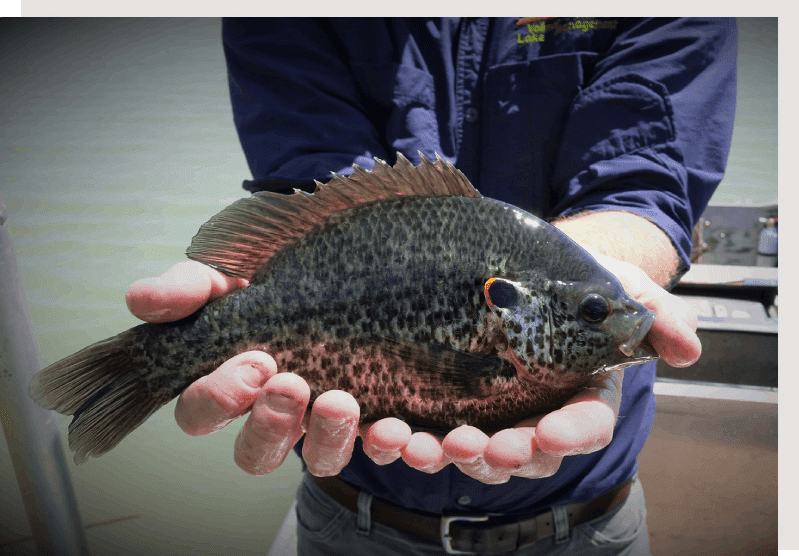
Black Crappie
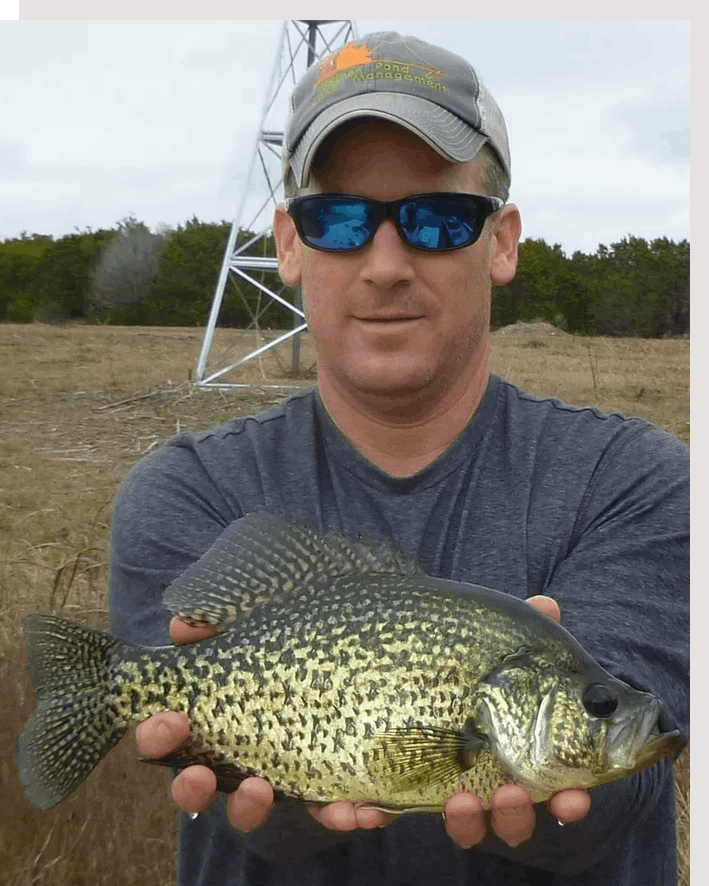
We get many requests for Crappie stocking. Black Crappie are a highly prized fish to many anglers, especially with light tackle. Crappie are known for their sweet, flaky white flesh. With all their great attributes, we only recommend stocking these fish in larger ponds over 5 acres. The reason we recommend only stocking Crappie in larger ponds is because they are prolific spawners and tend to overpopulate leading the population to a stunted Crappie condition, all fish under 5”. They also have large mouths and will compete directly with bass in many of their life stages. If Largemouth Bass are your main target stay clear of Black Crappie. Odds of successful Black Crappie stocking increase as the water body increases in size and habitat complexity. If you have an existing population of Black Crappie, management for Bass can be successful with active fishery management practices. To help concentrate Black Crappie and have higher success in crappie fishing add a few brush or timber piles. These habitat features tend to be preferred by crappie. Black Crappie live less then 7 years and spawn multiple times when water reaches 60° F. The Texas state record for Black Crappie is just less than 4 Lbs.
Channel Catfish
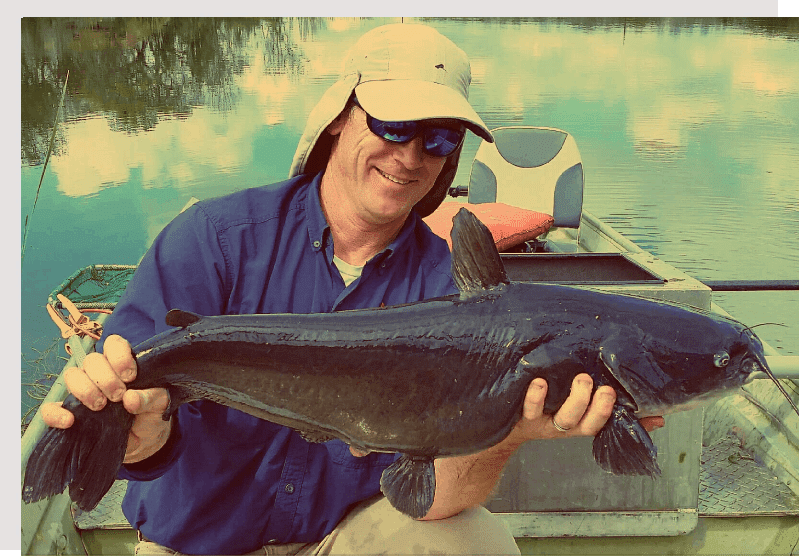
Channel Catfish are probably one of the most popular fish with lake owners that like to fill their frying pans with their catch. We recommend this catfish if you desire catfish in your bass lake because they provide lots of fun and attain a good size, but they do not attain the large size of the Blue Catfish. The Texas state record Channel Catfish is 36 Lbs, where the Texas state record Blue Catfish is 121 Lbs.. Channel Catfish generally live 6-7 years. Channel Catfish spawn when temperatures reach around 80° F. Generally Channel Catfish are stocked under the assumption that they will be a “Put-and-Take” fishery, meaning - you put in 100 Channel Catfish and catch 100 Channel Catfish; you then need to restock. Channel Catfish generally have low offspring survival in lakes with Largemouth Bass. Low offspring survival can also be attributed to lack of proper spawning habitat in small water bodies. If you do not want spawning, try to minimize cavity-forming habitat like hollow logs, coarse brush piles, tires, or undercut old creek banks.
Hybrid Striped Bass
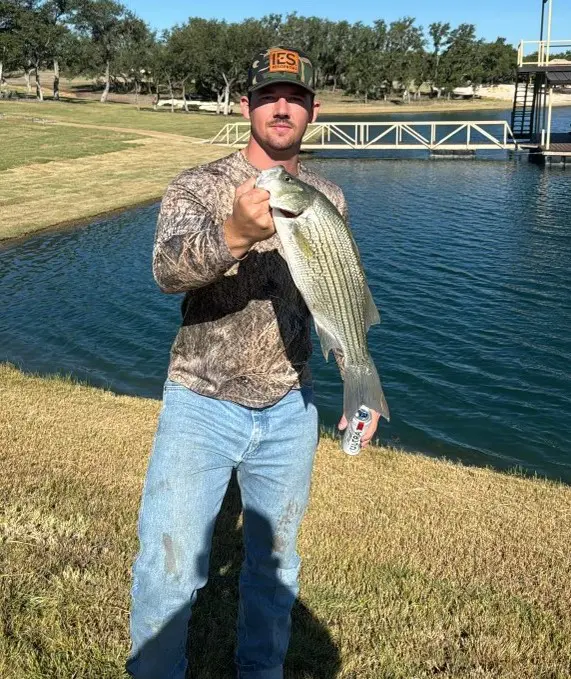
Hybrid Striped Bass are a cross between White Bass and Striped Bass and are considered true Bass and are not related to Largemouth Bass. Hybrid Striped Bass are sometimes called Wipers or Palmetto Bass. These fish are usually stocked as a supplement to an existing Largemouth Bass/Bluegill lake. If stocked heavily they will compete greatly with your Largemouth Bass, however they are known to come to supplemental feed well and grow rather quickly on it. So if they are stocked with your Largemouth Bass supplemental feeding is a must to help reduce their need to compete with your Largemouth Bass for food. Hybrid Striped Bass can also be stocked alone in smaller ponds if a supplemental feeding program is in place. Hybrid Striped Bass are functionally sterile and are considered a “put and take” fishery, meaning- you put in 100 Hybrid Striped Bass and catch 100 Hybrid Striped Bass; you then need to restock. The Texas state record is 19 Lbs., however 5-7 Lbs. is common. Hybrid Striped Bass live around 5-6 years. Hybrid Striped Bass provide great cool weather fishing when your other fish become difficult to catch due to cooler temperatures.
Hybrid Bluegill
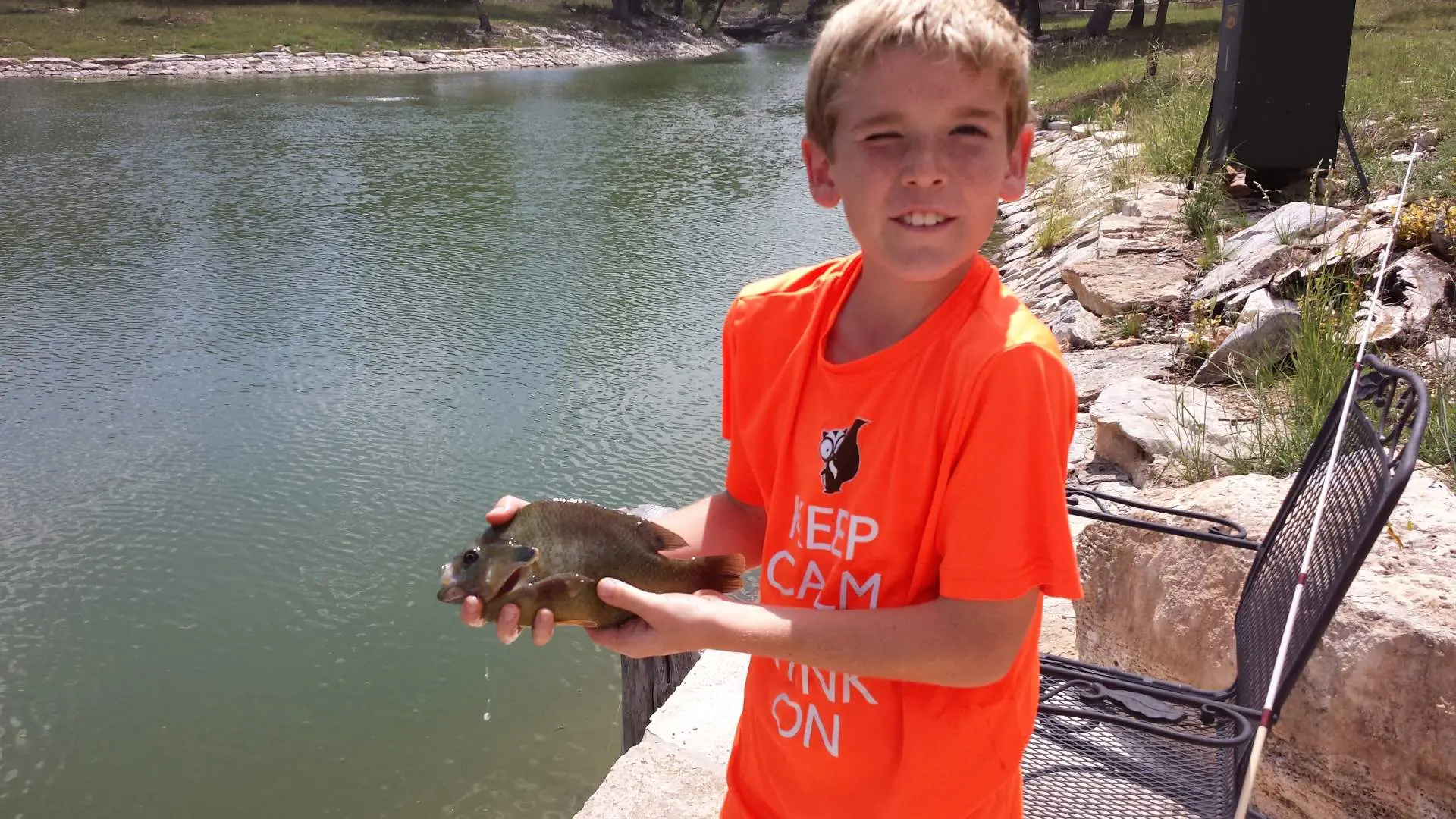
Hybrid Bluegill are most commonly a cross between a Bluegill and a Green Sunfish. This hybrid cross perfectly illustrates a natural phenomenon called “hybrid vigor”. Hybrid vigor in Hybrid Bluegill is shown in their accelerated growth rates and the fight they give on light fishing tackle. Hybrid Bluegill are not sterile, however, their reproduction is limited and offspring sex ratios tend to lean toward males, with few females, which also reduces reproduction. Hybrid Bluegill take supplemental feed readily and grow well on it. Hybrid Bluegill are a good option for smaller ponds with feeders.
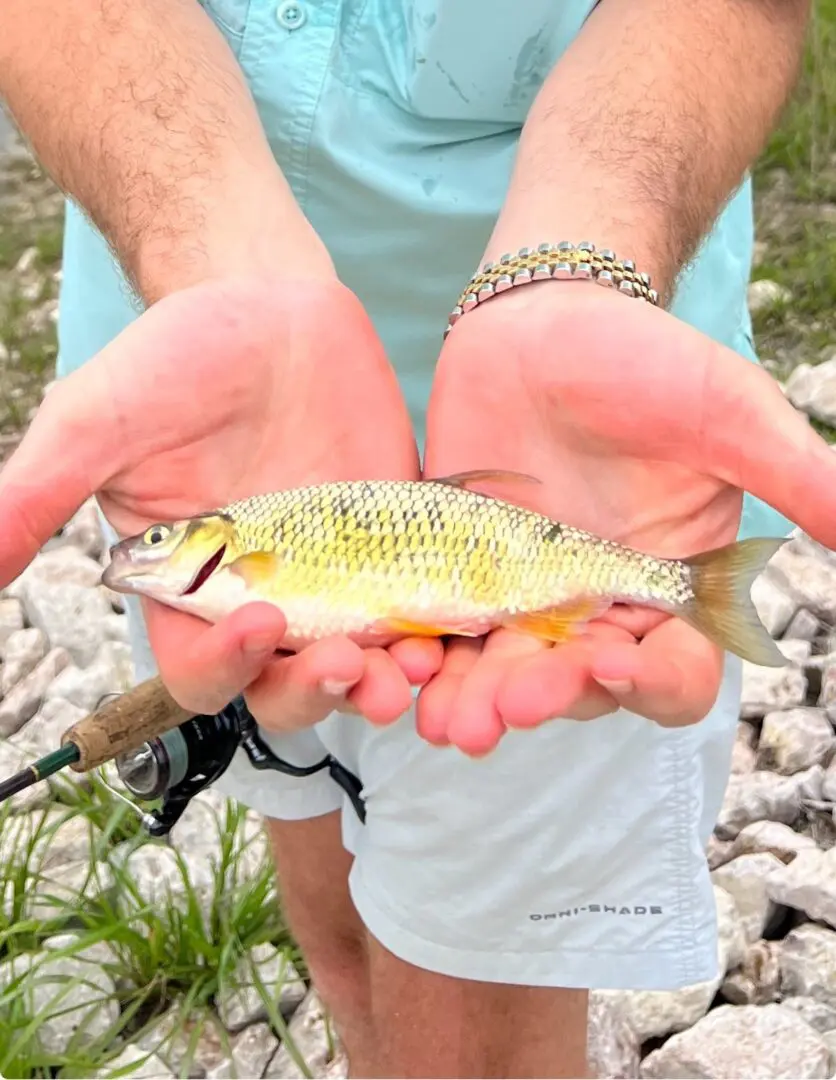
Golden Shiner (Minnow)
A prey fish utilized by almost all other fish in your lake.
This fish is hardy and prolific. Golden Shiners spawn when temperatures reach 68-80° F.
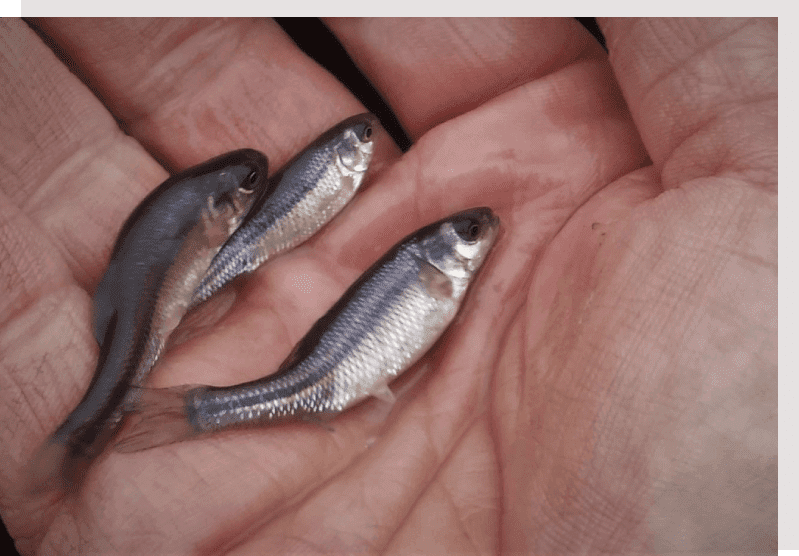
Fathead Minnow
A prey fish utilized by almost all other fish in your lake. This fish is hardy and prolific. Fathead Minnows spawn when temperatures reach 60–65 F.
Specialty Fish We Stock
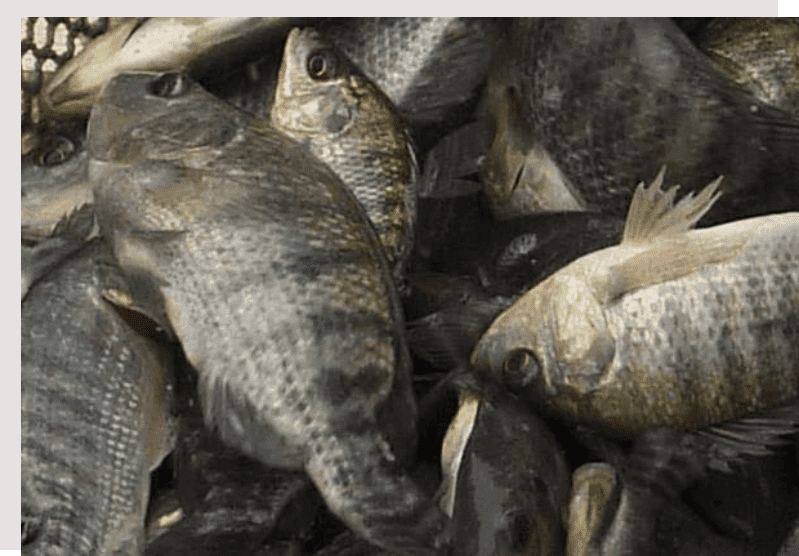
Tilapia
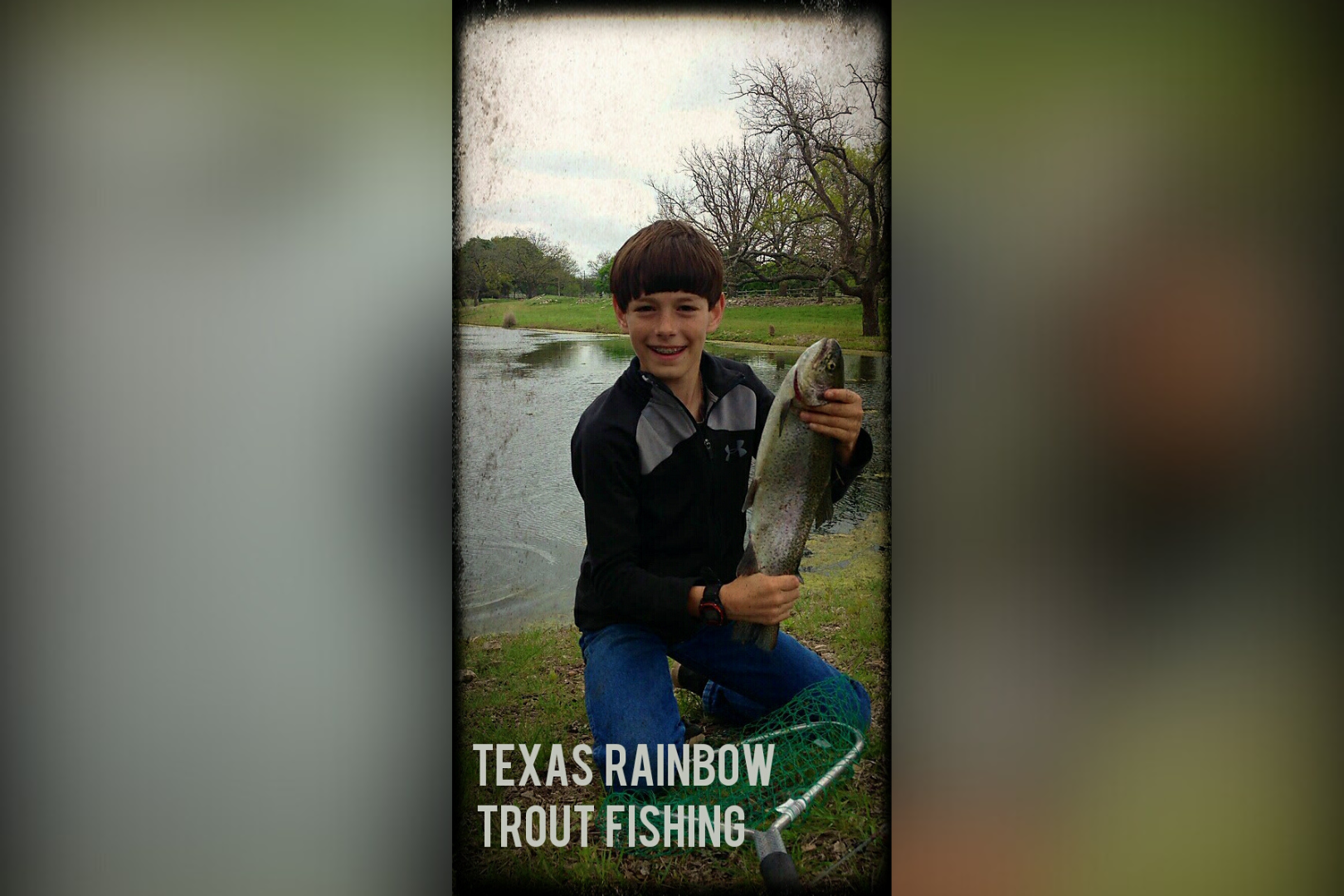
Rainbow Trout

Triploid Grass Carp
Importance of Habitat Variation
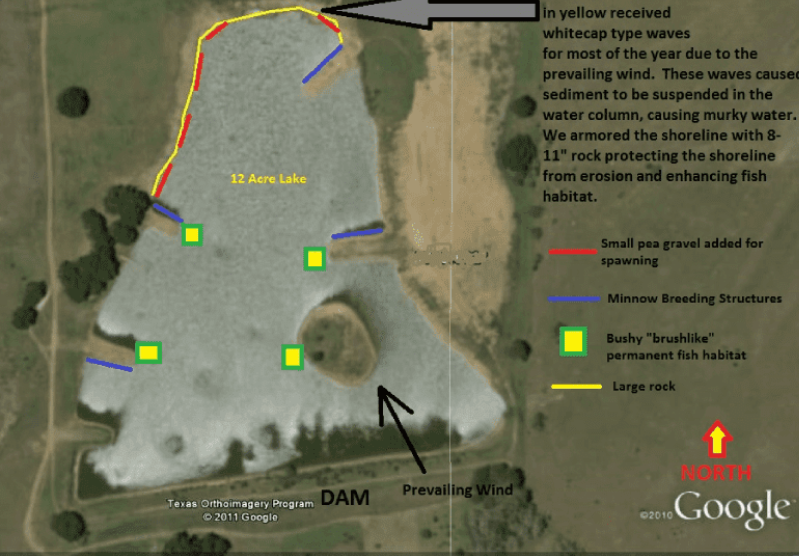
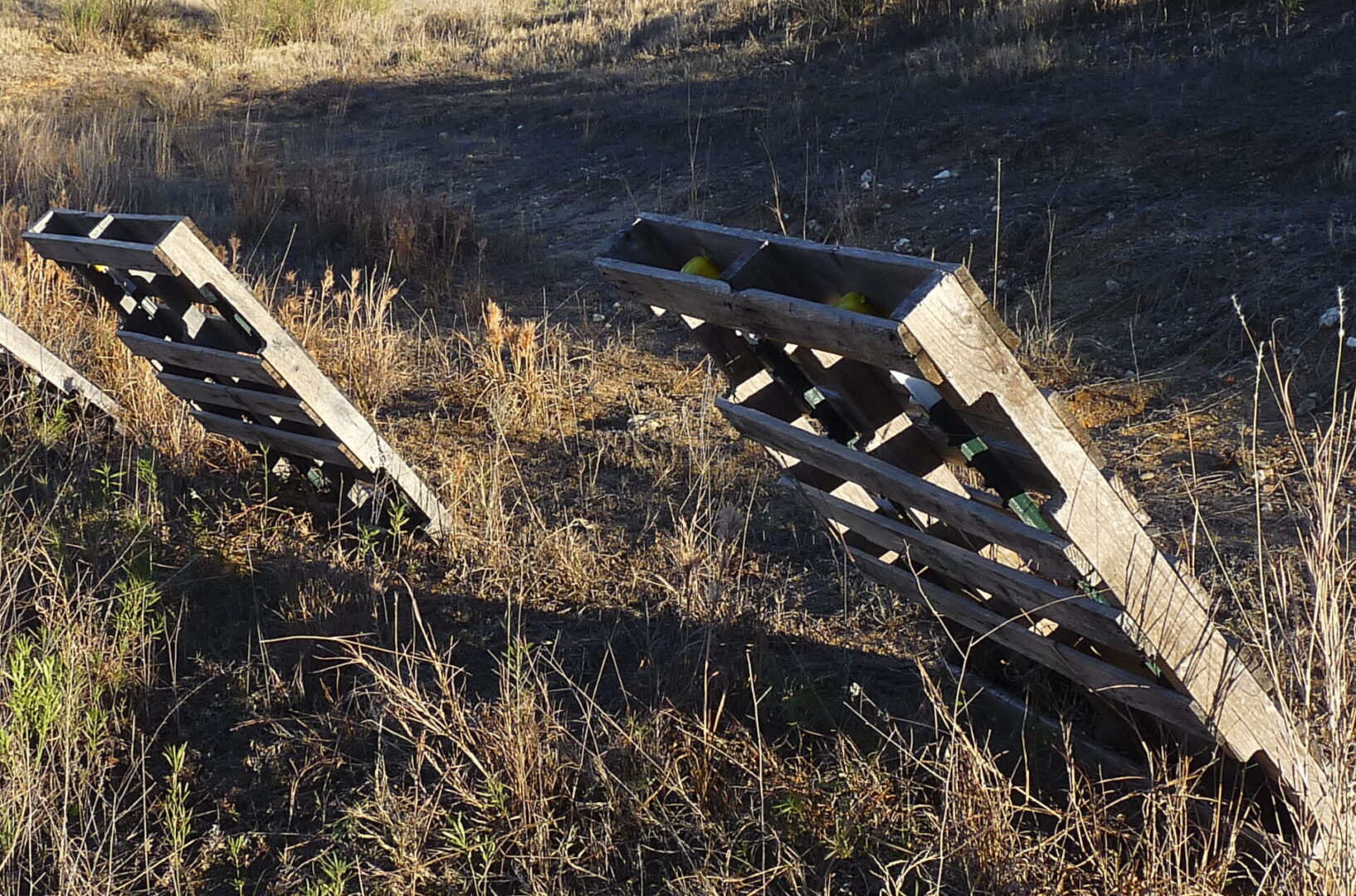
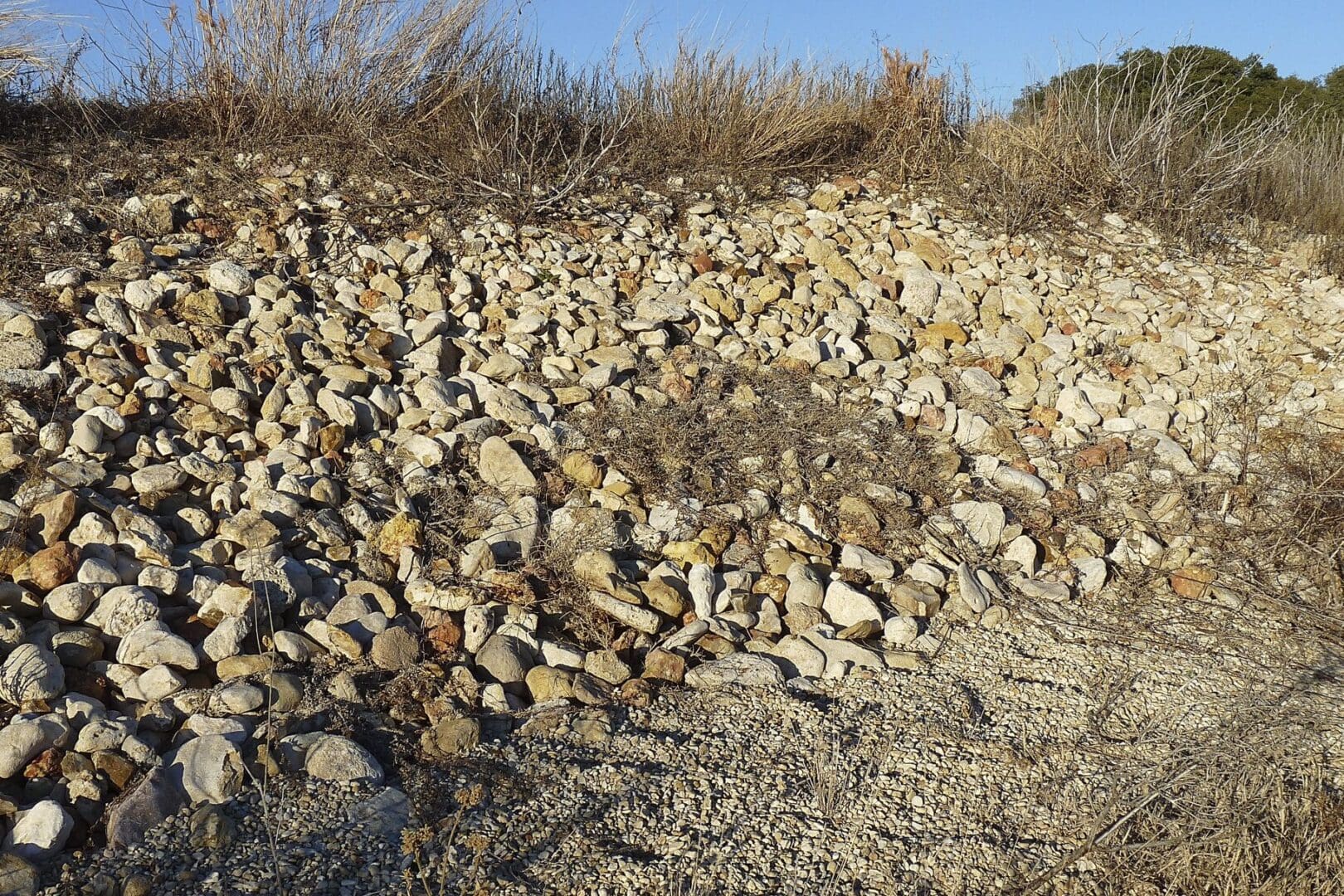
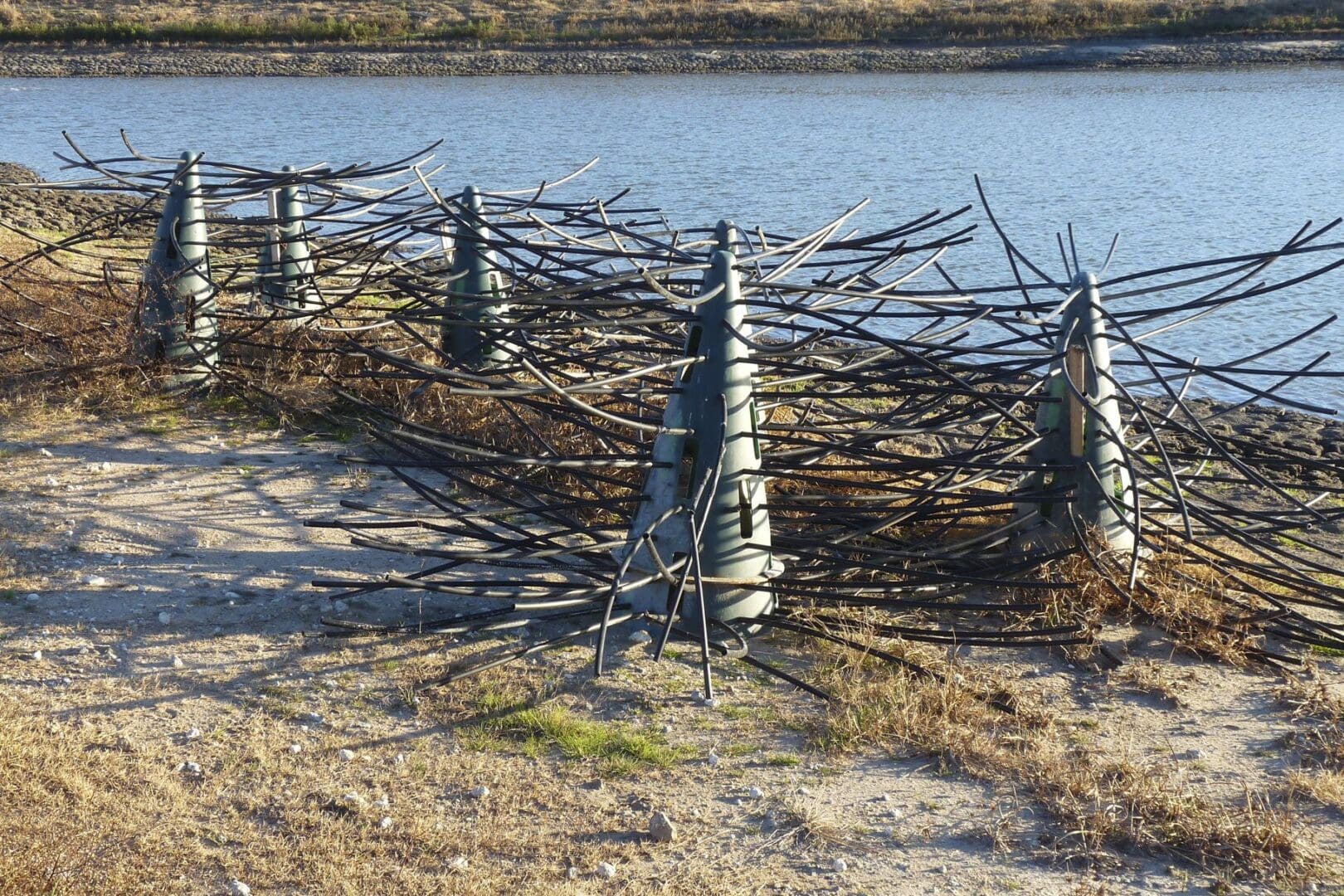
The fish habitat contained within your pond or lake is crucial to the production of quality fish. Fish prefer different types of habitats throughout their different life stages. Having a variety of fish habitats is crucial to producing a quality fishery. We can add rock riprap, gravel, hardwood piles, evergreen piles, and other types of structures.
Fishery Surveys / Assess Your Fish Population
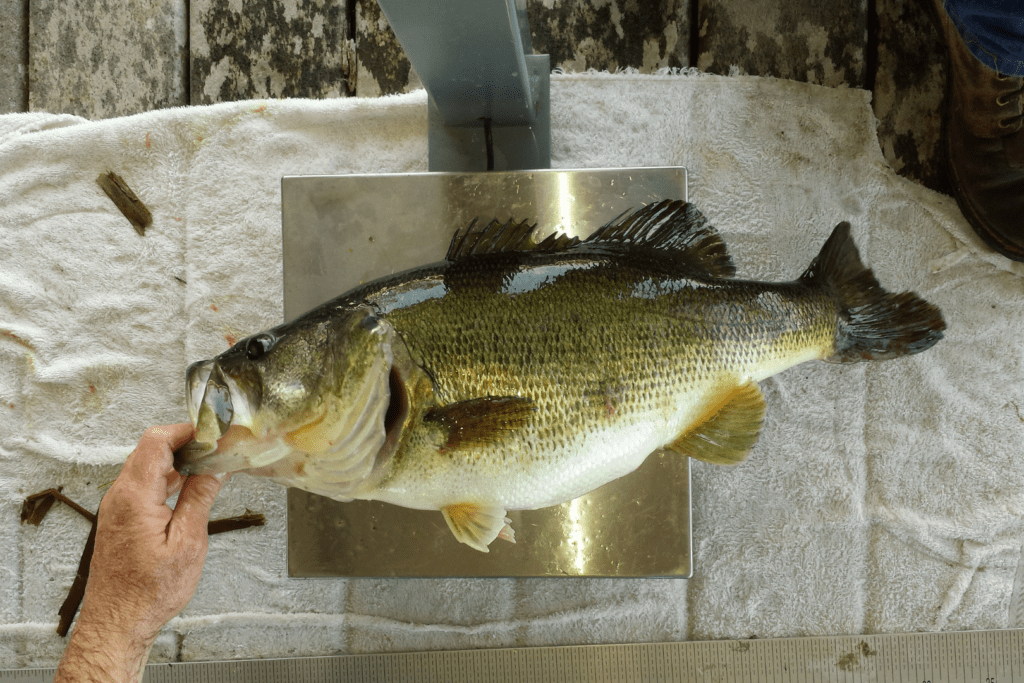
We have all the specialized equipment needed to assess your fish population.Electrofishing surveys are necessary before any active fishery management plan is enacted. We use techniques such as electrofishing (sometimes called lake shocking, fish shocking, or a shock survey), shoreline seining, and gill netting to assess your fishery.
Once the fish are collected, we weigh them to the nearest 1/100th pound and measure them to the nearest 1/8th inch. Fish condition (health) provides the insight necessary to determine the effectiveness of your current fishery management plan and practices.
A fishery survey will provide many fishery parameters, like:
- Species present
- Length and weight
- Relative weight (Wr) – Wr shows the condition of your fish compared to healthy fish.
- Proportional Stocking Density (PSD) of game species:
- Fish Density (CPUE)

Pond & Lake Restoration
May Be the Best Solution
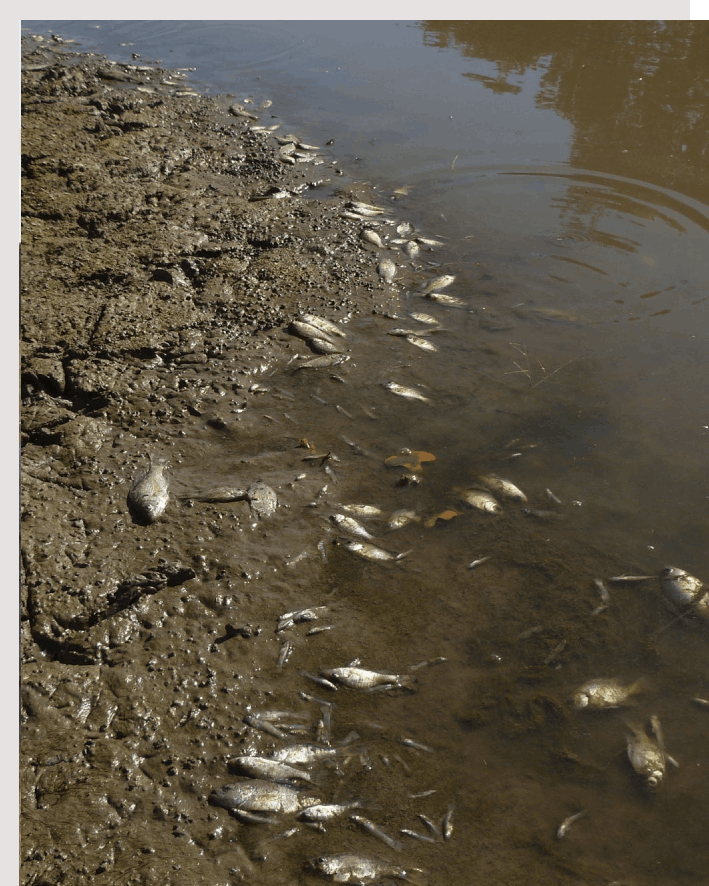
Complete pond or lake restorations completely eradicate all existing fish in a pond or lake, which gives the lake owner and manager a clean slate to start from.
Complete pond or lake restorations are usually called for when the pond or lake has a very marginal population of fish, usually exhibiting:
- Largemouth Bass with a severely disjointed size structure (maybe missing entire year classes).
- Extremely malnourished fish
- Large populations of rough fish, sometimes the only answer to the problem of rough fish populations like common carp or bullheads.
We use EPA-labeled Rotenone products to perform these fish eradication. We are certified by the Texas Agriculture Department to perform Rotenone applications.
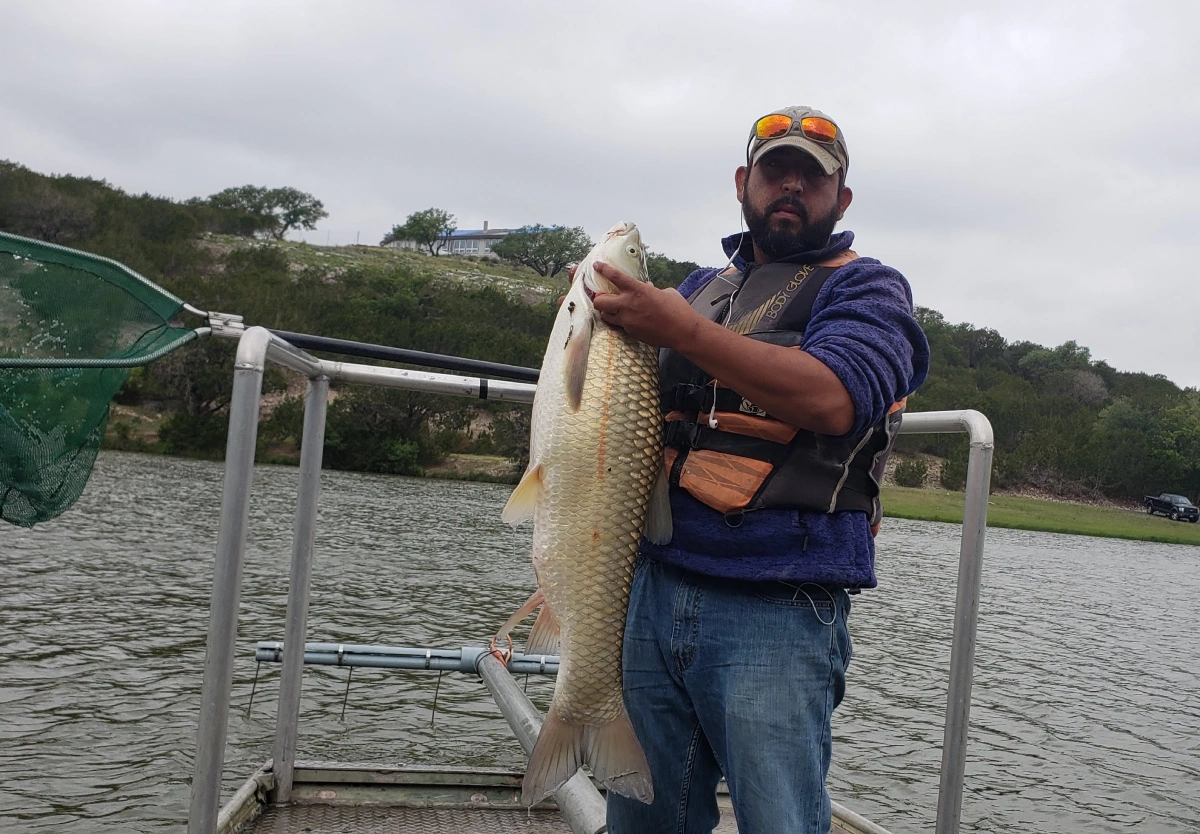
Triploid Grass Carp are a non-reproductive exotic species, which can be stocked into Texas waters with an approved Grass Carp Permit Application from the Texas Parks and Wildlife Department. Triploid Grass Carp are herbivores and can be used as an additional tool to control excessive vegetation or algae. Vollmar Pond and Lake Management is a Texas Parks and Wildlife Department Exotic Species Permit holder and can be your source for Triploid Grass Carp in Texas. We can assist in your Texas Grass Carp Permit Application, from simple assistance to complete "we do it all" application submittals.